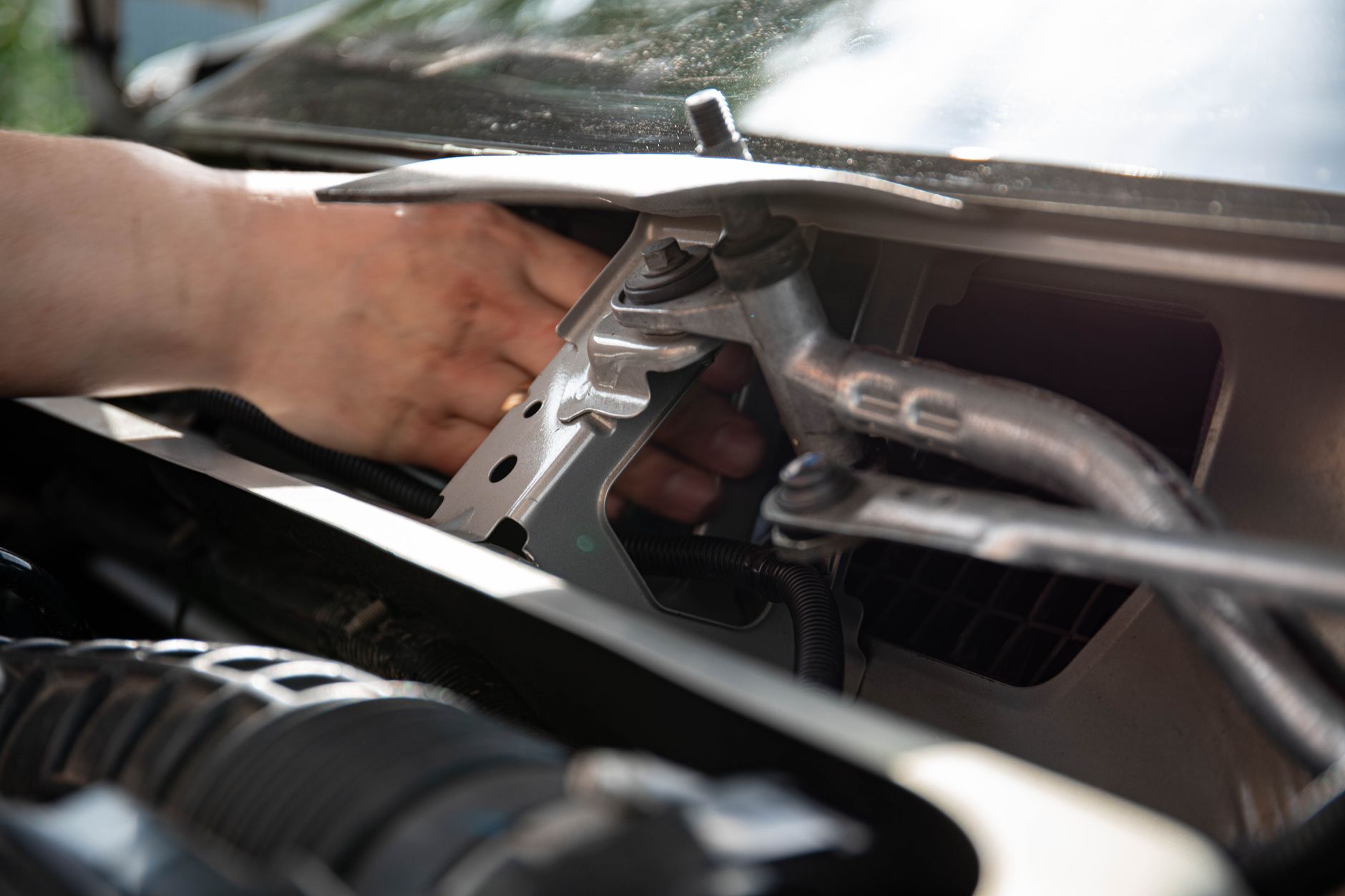
What is an Oxygen Sensor? Your Car's Unsung Hero
oxygen sensor

What is an Oxygen Sensor? Your Car's Unsung Hero

Discover the critical component that optimizes your engine's performance, fuel economy, and reduces harmful emissions.

Learn More

Key Takeaways

  • ✓ The oxygen sensor, also known as an O2 sensor or lambda sensor, measures the amount of unburned oxygen in your vehicle's exhaust gases.
  • ✓ It plays a crucial role in maintaining optimal air-fuel ratio for efficient combustion, directly impacting fuel economy and engine performance.
  • ✓ A faulty oxygen sensor can lead to decreased fuel efficiency, increased emissions, rough idling, and illuminate the 'Check Engine' light.
  • ✓ Most modern vehicles have multiple oxygen sensors, often one before and one after the catalytic converter, to monitor its efficiency.

How It Works

1
Exhaust Gas Analysis

The oxygen sensor is strategically placed in the exhaust system, where it comes into direct contact with the exhaust gases leaving the engine. Its primary function is to analyze the oxygen content within these gases.

2
Voltage Signal Generation

Based on the oxygen level detected, the sensor generates a voltage signal. A high oxygen content (lean mixture) results in a low voltage, while a low oxygen content (rich mixture) generates a high voltage.

3
ECM/PCM Communication

This voltage signal is then sent to the vehicle's Engine Control Module (ECM) or Powertrain Control Module (PCM). The ECM/PCM acts as the 'brain' of the engine, constantly processing data from various sensors.

4
Fuel Injection Adjustment

Using the oxygen sensor's input, the ECM/PCM precisely adjusts the amount of fuel injected into the engine's combustion chambers. This continuous feedback loop ensures the engine maintains the ideal air-fuel ratio, known as stoichiometry.

The Critical Role of the O2 Sensor in Engine Performance

Detailed view of Mercedes AMG exhaust showcasing luxury design. Photo: Pho Tomass / Pexels
At the heart of every modern internal combustion engine's efficiency and environmental compliance lies a small, yet immensely powerful component: the oxygen sensor, often referred to as an O2 sensor or lambda sensor. To truly understand what is an oxygen sensor, we must delve into its fundamental operation and its profound impact on your vehicle. This sensor is strategically positioned within the exhaust system, typically before and sometimes after the catalytic converter. Its primary job is to measure the proportion of unburned oxygen in the exhaust gases exiting the engine. This measurement is not just a simple reading; it's a critical data point that informs your car's Engine Control Module (ECM) or Powertrain Control Module (PCM) about the combustion process. When your engine burns fuel, the ideal scenario is a complete combustion where all the fuel combines with the right amount of oxygen. This perfect balance is known as the stoichiometric air-fuel ratio, approximately 14.7 parts air to 1 part fuel. The oxygen sensor constantly monitors how close the engine is to this ideal ratio. If the sensor detects too much oxygen in the exhaust, it indicates a 'lean' mixture – too much air or not enough fuel. Conversely, if it detects too little oxygen, it signals a 'rich' mixture – too much fuel or not enough air. This continuous feedback loop is vital. The O2 sensor generates a voltage signal proportional to the oxygen content, which is then transmitted to the ECM. The ECM, in turn, uses this information to make instantaneous adjustments to the fuel injection system. For instance, if the sensor reports a lean condition, the ECM will increase the amount of fuel injected. If it reports a rich condition, the ECM will reduce the fuel. This dynamic adjustment ensures that the engine operates at peak efficiency, minimizing fuel consumption and maximizing power output. Without a properly functioning oxygen sensor, your engine would essentially be running blind, leading to a cascade of negative effects on performance and economy. It's a silent guardian, constantly working to optimize your driving experience and protect the environment.

How a Faulty Oxygen Sensor Affects Your Vehicle

Mechanic examining a car engine's oil level using a dipstick in a garage setting. Photo: Fatih Erden / Pexels
Understanding what is an oxygen sensor is only half the battle; recognizing the symptoms of its failure is equally important for any car owner. A failing or completely failed oxygen sensor can manifest in a variety of ways, none of which are beneficial to your vehicle's health or your wallet. One of the most common and immediate indicators of an O2 sensor problem is the illumination of the 'Check Engine' light on your dashboard. This light is often triggered when the ECM detects an out-of-range signal from the sensor, indicating it can no longer accurately monitor the air-fuel mixture. While the 'Check Engine' light can signify numerous issues, an O2 sensor fault is a frequent culprit. Beyond the warning light, you'll likely experience a noticeable decline in fuel efficiency. Since the ECM relies on the O2 sensor to fine-tune fuel delivery, a faulty sensor can cause the engine to either run too rich (wasting fuel) or too lean (potentially damaging components). Drivers often report a significant drop in miles per gallon, turning routine commutes into more expensive journeys. Performance issues are also common. You might notice a hesitant acceleration, a rough idle, or even stalling, especially when the engine is cold. The engine might also feel sluggish or lack its usual power, as it struggles to maintain the correct combustion balance. Another critical consequence of a failing oxygen sensor is an increase in harmful emissions. The O2 sensor is a cornerstone of your vehicle's emissions control system. By ensuring the correct air-fuel ratio, it helps the catalytic converter function effectively, converting pollutants like carbon monoxide, hydrocarbons, and nitrogen oxides into less harmful substances. When the O2 sensor malfunctions, the engine might produce excessive amounts of these pollutants, leading to a failure during emissions tests and contributing to air pollution. In some cases, you might even notice a strong, unpleasant odor from the exhaust, such as a sulfur or rotten egg smell, which can indicate an issue with the catalytic converter struggling due to an incorrect air-fuel mixture caused by a bad O2 sensor. Addressing these symptoms promptly can prevent more extensive and costly repairs down the line.

Types of Oxygen Sensors and Their Placement
Close-up of industrial pressure gauges mounted on a metal grid in a factory setting. Photo: Ann H / Pexels
When discussing what is an oxygen sensor, it's important to recognize that not all O2 sensors are created equal, nor are they placed in the same location. Modern vehicles often utilize multiple types of oxygen sensors, each serving a specific function within the exhaust system. Historically, vehicles used zirconium dioxide (zirconia) sensors, which are the most common type and generate a voltage signal based on oxygen concentration. More advanced vehicles, particularly those with stricter emission standards, may employ titanium dioxide (titania) sensors or wideband oxygen sensors (also known as air-fuel ratio sensors). Wideband sensors are capable of providing a much more precise and continuous measurement of the air-fuel ratio over a broader range, allowing for finer engine control and even better emissions reduction and fuel economy. These wideband sensors are increasingly found in newer vehicles, especially those with direct injection or forced induction systems. Beyond the different technologies, the placement of oxygen sensors is crucial. Most modern vehicles are equipped with at least two, and often four, oxygen sensors. The primary sensor, known as the upstream or 'sensor 1' (often designated as Bank 1 Sensor 1 and Bank 2 Sensor 1 for V-type engines), is located before the catalytic converter. Its main role is to monitor the exhaust gases directly from the engine and send feedback to the ECM for immediate air-fuel mixture adjustments. This upstream sensor is the most critical for engine performance and fuel efficiency. The secondary sensor, known as the downstream or 'sensor 2' (e.g., Bank 1 Sensor 2), is positioned after the catalytic converter. Its purpose is to monitor the efficiency of the catalytic converter itself. By comparing the oxygen content before and after the converter, the ECM can determine if the converter is effectively reducing pollutants. If the readings from the upstream and downstream sensors are too similar, it indicates that the catalytic converter is not functioning as it should, often triggering a 'Check Engine' light related to converter efficiency. Some vehicles with multiple exhaust banks (like V6 or V8 engines) will have a pair of upstream and downstream sensors for each bank, leading to four or more sensors in total. Understanding the specific type and location of the oxygen sensors in your vehicle is essential for accurate diagnosis and repair.

Troubleshooting and Replacing Your Oxygen Sensor

A mechanic working on a car tire, changing it in an auto repair shop. Photo: Frans van Heerden / Pexels
When your vehicle exhibits symptoms of a failing oxygen sensor – such as a 'Check Engine' light, poor fuel economy, or rough engine performance – timely troubleshooting and replacement are key. The first step in troubleshooting is to retrieve diagnostic trouble codes (DTCs) from your vehicle's On-Board Diagnostics II (OBD-II) system using a scan tool. Common O2 sensor codes include P0130-P0167, indicating various circuit malfunctions, slow response, or heater circuit issues. These codes provide valuable clues about which specific sensor (e.g., Bank 1 Sensor 1) might be at fault. Replacing an oxygen sensor is often a DIY task for those with some mechanical aptitude, but it requires the right tools and caution. **Tools and Materials You'll Need:** * OBD-II scan tool * New oxygen sensor (ensure it's the correct part number for your vehicle and sensor location) * Oxygen sensor socket (a specialized deep well socket with a side cut-out for the wire) * Ratchet and extension * Anti-seize compound (usually included with the new sensor) * Gloves and eye protection **Step-by-Step Replacement Guide:** 1. **Locate the Sensor:** Consult your vehicle's service manual or an online diagram to pinpoint the exact location of the faulty oxygen sensor. 2. **Disconnect Battery (Optional but Recommended):** For safety, disconnect the negative terminal of your car's battery. 3. **Disconnect Electrical Connector:** Carefully unplug the electrical connector from the sensor. These can be stiff and may require a small screwdriver to release the clip. 4. **Remove Old Sensor:** Using the oxygen sensor socket and ratchet, loosen and remove the old sensor. They can be very tight, especially if rusted. Applying penetrating oil beforehand can help. 5. **Prepare New Sensor:** Apply a thin layer of anti-seize compound to the threads of the new sensor. This prevents it from seizing in the exhaust pipe later. 6. **Install New Sensor:** Thread the new sensor into the exhaust bung by hand to avoid cross-threading. Once finger-tight, use the oxygen sensor socket to snug it down. Do not overtighten. 7. **Reconnect Electrical Connector:** Plug the electrical connector firmly back into the new sensor. 8. **Reconnect Battery:** If disconnected, reconnect the negative battery terminal. 9. **Clear Codes:** Use your OBD-II scan tool to clear the diagnostic trouble codes. Drive the vehicle for a few cycles to allow the ECM to relearn and confirm the repair. It's important to note that while replacing an O2 sensor can seem straightforward, if you're uncomfortable, or if the sensor is seized, it's always best to consult a professional mechanic. Improper installation can lead to exhaust leaks or damage to the new sensor or exhaust system.

Comparison

FeatureZirconia O2 SensorTitania O2 SensorWideband O2 Sensor
PrincipleGenerates voltage (0-1V)Changes resistanceMaintains constant current
AccuracyNarrow range, 'switch-like'Narrow range, 'switch-like'Very precise, continuous
Response TimeSlowerFasterFastest
ApplicationCommon, upstream/downstreamLess common, some OEMsNewer vehicles, upstream only
CostEconomicalModerateHigher
Heater Circuit

What Readers Say

"My 'Check Engine' light was on for months, and my gas mileage was terrible. After reading about what is an oxygen sensor, I replaced my upstream sensor, and the light went off immediately. My car feels much more responsive, and I'm saving a ton on gas!"

David M. · Austin, TX

"This article was incredibly helpful in understanding what is an oxygen sensor. I was able to diagnose my rough idle and poor acceleration to a faulty O2 sensor. Replaced it myself following the guide, and my car is running smoothly again."

Sarah J. · Orlando, FL

"My vehicle failed its emissions test, and the mechanic quoted me a fortune for a new catalytic converter. After reading this, I tried replacing the downstream O2 sensor first, and it passed with flying colors! Saved me over a thousand dollars."

Mark T. · Denver, CO

"Good explanation of what is an oxygen sensor. While the DIY steps were clear, my sensor was completely rusted in place. Ended up needing a professional, but at least I understood the problem thanks to this article."

Jessica L. · Seattle, WA

"As a former auto tech, I appreciate the thoroughness of this article. It covers all the essential aspects of what is an oxygen sensor, from its function to troubleshooting. Excellent resource for both novices and experienced DIYers."

Robert K. · Phoenix, AZ

Frequently Asked Questions

What is the primary function of an oxygen sensor?

The primary function of an oxygen sensor is to measure the amount of unburned oxygen in your vehicle's exhaust gases. This data is then sent to the Engine Control Module (ECM) which uses it to precisely adjust the air-fuel mixture, ensuring optimal combustion, fuel efficiency, and reduced emissions.

Can I drive with a bad oxygen sensor?

While your car might still run with a bad oxygen sensor, it's not advisable to drive for an extended period. A faulty sensor will cause decreased fuel economy, increased emissions, potential engine damage due to incorrect air-fuel ratios, and may lead to failure of emissions tests. It's best to address the issue promptly.

How do I know if my oxygen sensor is bad?

Common symptoms of a bad oxygen sensor include the 'Check Engine' light illuminating on your dashboard, a noticeable decrease in fuel efficiency, rough idling, engine misfires, hesitant acceleration, and sometimes a strong sulfur-like smell from the exhaust. An OBD-II scan tool can also confirm specific O2 sensor error codes.

How much does it cost to replace an oxygen sensor?

The cost to replace an oxygen sensor varies widely based on your vehicle's make and model, the specific sensor (upstream vs. downstream, type), and whether you do it yourself or hire a mechanic. Parts can range from $50-$200, while professional labor can add another $100-$300, making the total cost anywhere from $150 to $500+.

Is an oxygen sensor the same as a MAF sensor?

No, an oxygen sensor (O2 sensor) is not the same as a Mass Air Flow (MAF) sensor. The O2 sensor measures oxygen in the exhaust AFTER combustion, providing feedback for fuel adjustments. The MAF sensor measures the amount of air entering the engine BEFORE combustion, helping the ECM determine initial fuel delivery. They work together but have distinct roles.

Who should replace an oxygen sensor?

Anyone with basic mechanical skills, the correct tools (especially an O2 sensor socket), and a willingness to follow instructions can often replace an oxygen sensor. However, if the sensor is seized, difficult to access, or if you're uncomfortable working on your vehicle, it's always best to have a certified mechanic perform the replacement to avoid potential damage.

Are there any risks associated with ignoring a faulty oxygen sensor?

Yes, ignoring a faulty oxygen sensor can lead to several risks. Beyond poor fuel economy and increased emissions, a continuously rich or lean running engine can cause significant damage to expensive components like the catalytic converter, spark plugs, and even internal engine parts over time, leading to much more costly repairs.

What are the future trends for oxygen sensor technology?

Future trends in oxygen sensor technology are moving towards even greater precision and integration. We can expect more widespread adoption of wideband (air-fuel ratio) sensors for finer control, faster response times, and increased durability. There's also research into alternative sensing materials and smarter, self-calibrating sensors to further enhance engine efficiency and reduce emissions in the face of evolving automotive technology.

Now that you understand what is an oxygen sensor and its vital role, don't let a faulty one compromise your vehicle's performance or your wallet. Take action today to diagnose and address any O2 sensor issues, ensuring your car runs efficiently, cleanly, and reliably for years to come.

Topics: oxygen sensorO2 sensorlambda sensorcar emissionsfuel efficiency
Leo List
Brampton weed
Adultwork EstrelaBet Vai de Bet R7 Bet Betão Galera Bet Rainbet Bet9ja Shop SportyBet BetKing Sisal Loto Foot Hollywoodbets YesPlay Odibets RushBet Jugabet BetWarrior BetCity MSport betPawa Fortebet