Mastering How to Jump Start a Car Safely
how to jump start a car safely

Mastering How to Jump Start a Car Safely

Unlock the essential skills to safely jump start your vehicle and get back on the road with confidence.

Read the Full Guide

Key Takeaways

  • ✓ Always connect the positive (+) cable first to the dead battery.
  • ✓ Ensure both vehicles are turned off before connecting cables.
  • ✓ Never let the jumper cable clamps touch each other.
  • ✓ Keep hands and clothing clear of moving engine parts.

How It Works

1
Prepare Both Vehicles

Position the working vehicle close enough for cables to reach, but not touching. Turn off both vehicles and engage their parking brakes.

2
Connect Positive Cables

Attach one red (+) clamp to the positive terminal of the dead battery. Connect the other red (+) clamp to the positive terminal of the working battery.

3
Connect Negative Cables

Attach one black (-) clamp to the negative terminal of the working battery. Attach the other black (-) clamp to an unpainted metal surface on the dead car's engine block or frame, away from the battery.

4
Start the Working Vehicle

Start the engine of the working vehicle and let it run for a few minutes. This allows the dead battery to receive some charge.

Understanding Your Car Battery and Jump Starting Essentials
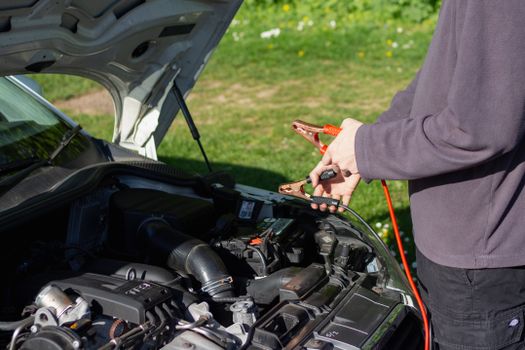
Man using jumper cables on car engine outdoors on a sunny day. Vehicle maintenance and repair concept. Photo: Daniel @ bestjumpstarterreview.com / Pexels
A dead car battery can be an incredibly frustrating experience, often striking at the most inconvenient times. Whether you left your lights on, have an aging battery, or face extreme weather conditions, knowing how to jump start a car safely is a vital skill for any driver. This comprehensive guide will equip you with the knowledge and confidence to handle such a situation, minimizing stress and maximizing safety. Before diving into the step-by-step process, it's crucial to understand the basics of your car's electrical system and the components involved in a jump start. Your car battery, typically a 12-volt lead-acid battery, is responsible for providing the initial surge of electricity needed to crank the engine. Once the engine starts, the alternator takes over, powering the electrical system and recharging the battery. When your battery dies, it simply means it doesn't have enough charge to initiate this process. The primary tools for a jump start are jumper cables. These are thick, insulated wires with alligator clips at each end, designed to transfer electrical current from a working battery to a dead one. Quality jumper cables are essential; look for ones with a heavy gauge (lower gauge numbers mean thicker wire, which conducts electricity more efficiently) and sturdy, well-insulated clamps. The length of the cables is also important, as it determines how close the two vehicles need to be. Always keep a set of reliable jumper cables in your trunk as part of your emergency kit. Beyond the cables, understanding the 'donor' vehicle is key. This is the vehicle with the working battery that will provide the necessary power. It's important that the donor vehicle has a 12-volt electrical system, which is standard for most passenger cars and light trucks. While it's generally safe to jump start a smaller car with a larger car, or vice versa, always exercise caution. Some modern vehicles, particularly hybrids or those with complex electronic systems, might have specific jump-starting instructions outlined in their owner's manual. Familiarize yourself with your vehicle's manual before you ever need to jump start it. Safety is paramount when dealing with car batteries. Batteries contain corrosive sulfuric acid and produce explosive hydrogen gas, especially during charging or when malfunctioning. This is why proper ventilation and avoiding sparks are critical. Always wear appropriate personal protective equipment, such as gloves and eye protection, if available. Understanding these fundamental aspects will lay a solid foundation for safely executing a jump start. For more information on maintaining your car's electrical system, consider checking out our guide on choosing the right car battery.

Step-by-Step Guide: Safely Connecting Jumper Cables
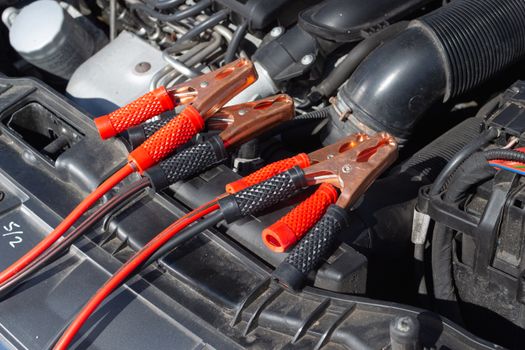
Close-up of car engine with attached jump starter cables, showing detailed mechanics. Photo: Daniel @ bestjumpstarterreview.com / Pexels
The actual process of connecting jumper cables might seem intimidating, but by following these steps precisely, you can perform it safely and effectively. The key is to connect the cables in the correct sequence to prevent sparks, electrical shorts, or damage to either vehicle's electrical system. **Step 1: Preparation is Key.** First, park the working vehicle so its battery is close to the dead vehicle's battery, but ensure the vehicles are not touching. This minimizes the length the cables need to stretch and prevents accidental contact. Both vehicles should be turned off completely – engine, lights, radio, and all accessories. Engage the parking brakes on both vehicles to prevent any accidental rolling. If you have them, put on safety glasses and gloves. Open both hoods and locate the batteries. Identify the positive (+) and negative (-) terminals on each battery. The positive terminal is usually larger and marked with a plus sign (+), often covered by a red cap. The negative terminal is marked with a minus sign (-) and is typically black. **Step 2: Connecting the Positive Cables (Red).** Take one red (+) jumper cable clamp and attach it firmly to the positive (+) terminal of the dead battery. Ensure a good, metal-to-metal connection. Next, take the other red (+) jumper cable clamp and attach it to the positive (+) terminal of the working battery. Double-check that both red clamps are securely fastened to their respective positive terminals. This step establishes the positive electrical circuit between the two batteries. **Step 3: Connecting the Negative Cables (Black).** Now, take one black (-) jumper cable clamp and attach it firmly to the negative (-) terminal of the working battery. This completes the circuit on the working vehicle's side. For the final connection, this is where many people make a critical mistake. **Do NOT connect the remaining black (-) clamp directly to the negative terminal of the dead battery.** Instead, find a clean, unpainted metal surface on the engine block or frame of the dead car, away from the battery itself and any moving parts. This provides a ground connection and helps dissipate any potential sparks away from the battery, reducing the risk of igniting hydrogen gas. A good spot is often a metal bracket or a bolt on the engine. Ensure the clamp has a solid metal-to-metal contact. **Step 4: Verify Connections.** Before proceeding, take a moment to double-check all four connections: red to dead positive, red to working positive, black to working negative, and black to dead car's metal ground. Confirm they are all secure and not touching anything they shouldn't. Ensure the cables are not draped over any hot engine parts or moving belts. Once all connections are confirmed, you're ready for the next phase: starting the vehicles.

Starting, Disconnecting, and Post-Jump Start Care
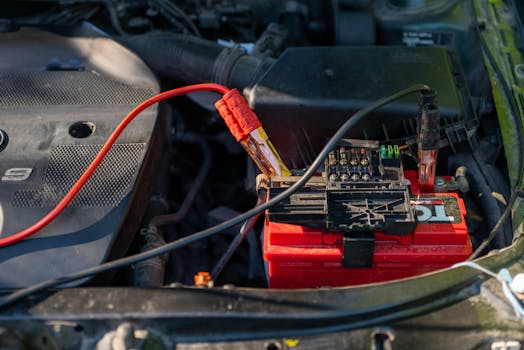
Close-up of a car battery with attached jumper cables in an engine bay. Photo: Vladimir Srajber / Pexels
With the cables properly connected, the next steps involve getting the dead car started and then safely disconnecting everything. This phase is just as important as the connection process to ensure no damage occurs and that your car stays running. **Step 5: Start the Working Vehicle.** Once all cables are securely attached, start the engine of the working vehicle. Let it run for about 5-10 minutes. This allows the alternator in the working car to send a charge to the dead battery, giving it a baseline amount of power. You might even rev the engine slightly (to about 1500-2000 RPM) for a minute or two to increase the charging rate, but don't overdo it. While the working car is running, check for any unusual smells or sounds from either battery or the cables. If you notice anything concerning, immediately shut off the working vehicle and reassess the connections. **Step 6: Attempt to Start the Dead Vehicle.** After the waiting period, try to start the dead vehicle. If it cranks slowly but doesn't start, give it a few more minutes of charging from the working vehicle. If it still doesn't start after a second attempt, there might be a more serious issue than just a dead battery, such as a faulty starter or alternator. In this case, it's best to call for professional roadside assistance. If the dead car starts, congratulations! Let it run for a few minutes on its own before proceeding to disconnect the cables. **Step 7: Safely Disconnect the Cables.** Disconnecting the cables also follows a specific order, which is the reverse of the connection process. First, disconnect the black (-) clamp from the unpainted metal surface of the now-running dead car. Then, disconnect the black (-) clamp from the negative terminal of the working battery. Next, disconnect the red (+) clamp from the positive terminal of the working battery. Finally, disconnect the red (+) clamp from the positive terminal of the now-running dead battery. Always ensure the clamps do not touch each other or any metal surfaces on the vehicles after disconnection until they are properly stored. **Step 8: Post-Jump Start Care.** Once your car is running, do not turn it off immediately. Drive it for at least 20-30 minutes, preferably at highway speeds, to allow the alternator to fully recharge the battery. Short trips right after a jump start might not provide enough charge, leading to another dead battery situation. It's also a good idea to have your battery and charging system checked by a mechanic soon after a jump start. They can test the battery's health and ensure your alternator is functioning correctly. This proactive step can prevent future breakdowns and ensure the longevity of your vehicle's electrical components. For deeper insights into car maintenance, explore our guide on understanding car alternator function.

Common Mistakes to Avoid and Essential Safety Tips

While jump starting a car is a relatively straightforward process, several common mistakes can lead to safety hazards or damage to your vehicle. Being aware of these pitfalls and adhering to essential safety tips will significantly enhance your jump-starting experience. **Common Mistakes to Avoid:** * **Incorrect Cable Connection Order:** This is the most frequent and dangerous mistake. Reversing the positive and negative terminals can cause sparks, battery explosions, or severe damage to your vehicle's electrical system, including sensitive electronics. Always connect positive to positive, and negative to the working battery's negative, then to the dead car's metal ground. * **Letting Clamps Touch:** Never allow the red and black clamps to touch each other once they are connected to a battery. This creates a direct short circuit, causing a large spark, potential fire, and damage to the battery and cables. * **Connecting Negative to Dead Battery Negative:** As mentioned, connecting the negative clamp directly to the negative terminal of the dead battery can cause sparks directly over the battery, risking ignition of hydrogen gas. * **Ignoring Vehicle Manuals:** Some modern vehicles, especially hybrids or those with advanced electronic control units (ECUs), have specific jump-starting procedures. Failure to follow these can lead to costly damage. Always consult your owner's manual first. * **Using Damaged Cables:** Jumper cables with frayed wires, cracked insulation, or loose clamps are unsafe and inefficient. They can cause poor connections, overheating, and electrical hazards. * **Not Letting the Working Car Run Long Enough:** Trying to start the dead car too quickly after connecting can mean the dead battery hasn't received enough charge. Give it a few minutes. * **Turning Off the Car Immediately After Jump:** As discussed, a short drive is crucial to allow the alternator to recharge the battery sufficiently. **Essential Safety Tips:** * **Wear Protective Gear:** Always wear safety glasses to protect your eyes from battery acid or sparks. Gloves can protect your hands. * **Ensure Proper Ventilation:** When working with car batteries, ensure you are in a well-ventilated area to disperse any hydrogen gas that might be released. * **Check Battery Condition:** If a battery is visibly cracked, leaking, or swollen, do not attempt to jump start it. It could explode. Call for professional assistance. * **Keep Away from Moving Parts:** Ensure all cables are clear of fan blades, belts, and other moving engine components once the engines are running. * **Avoid Smoking or Open Flames:** Due to the flammable hydrogen gas produced by batteries, never smoke or use open flames near a car battery during a jump start. * **Donor Vehicle Compatibility:** Ensure the donor vehicle has a 12-volt system. Avoid using vehicles with significantly different voltage systems. * **Emergency Kit:** Always keep a set of good quality jumper cables, safety glasses, and gloves in your vehicle's emergency kit. Consider a portable jump starter for situations where a donor car isn't available. By heeding these warnings and following the safety guidelines, you can significantly reduce the risks associated with jump starting a car and ensure a successful outcome.

Comparison

FeatureTraditional Jumper CablesPortable Jump StarterRoadside Assistance
Initial Cost$15-$50$60-$200+Annual Membership Fee
Requires Donor Car
Ease of UseModerate (needs two cars)Easy (self-contained)Very Easy (professional handles)
Safety RiskModerate (if done incorrectly)Low (built-in protections)Very Low
PortabilityGood (fits in trunk)Excellent (compact)N/A
Time to Start5-15 minutes2-5 minutes30-60+ minutes (wait time)
Learning Curve
Dependence on Others

What Readers Say

"This guide on how to jump start a car safely was a lifesaver! My battery died in a parking lot, and following these clear steps made the process stress-free and successful. The detailed instructions for connecting and disconnecting were incredibly helpful."

Michael S. · Dallas, TX

"I always feared jump-starting, but this article broke it down perfectly. The emphasis on safety and the correct order of connections gave me the confidence to help a friend with a dead battery. Highly recommend reading before you need it!"

Sarah L. · Orlando, FL

"After reading this, I successfully jump-started my SUV on the first try. The tip about connecting the negative to the engine block instead of the battery terminal was a game-changer for safety. My car started right up and I was able to drive home."

David R. · Seattle, WA

"Very informative guide, especially the section on common mistakes. I wish it had a bit more emphasis on what to do if the car doesn't start after a few attempts, but overall, it's an excellent resource for anyone unsure about jump starting."

Jessica M. · Phoenix, AZ

"This article isn't just for beginners; even experienced drivers can benefit from the safety reminders. I appreciated the detailed explanation of why each step is important, making me feel more secure when helping others with their dead batteries."

Tom K. · Denver, CO

Frequently Asked Questions

What are the most important safety precautions when jump starting a car?

The most important safety precautions include ensuring both vehicles are off and parking brakes engaged, wearing eye protection, never letting the clamps touch, connecting the negative cable to an unpainted metal surface on the dead car's engine block, and avoiding smoking or open flames near the battery due to explosive hydrogen gas.

Can jump starting damage my car's electronics?

If done incorrectly, jump starting can indeed damage sensitive electronics in your car, such as the ECU or stereo system. This risk is primarily due to voltage spikes from incorrect connections or allowing the cables to short-circuit. Following the correct connection and disconnection sequence minimizes this risk significantly.

How long should I let the working car run before trying to start the dead car?

After connecting the cables, let the working vehicle run for at least 5-10 minutes. This allows the dead battery to receive a sufficient initial charge. For very deeply discharged batteries, you might let it charge for up to 15-20 minutes before attempting to start the dead car.

Is it better to use a portable jump starter or traditional jumper cables?

Both have their advantages. Portable jump starters are more convenient as they don't require a second vehicle, making them ideal for solo situations. Traditional jumper cables are often cheaper but depend on finding a donor vehicle. For preparedness and ease, a portable jump starter is generally preferred, especially for frequent travelers or those with older batteries.

Can I jump start a car with a much larger or smaller engine?

Generally, yes, as long as both vehicles have 12-volt electrical systems. A larger engine vehicle can safely jump a smaller one, and vice versa, though a smaller donor car might need to run longer to provide adequate charge. The key is to ensure the battery voltage matches and to follow the safety steps carefully.

Who should use how to jump start a car safely?

Anyone who drives a vehicle should know how to jump start a car safely. This knowledge is essential for all drivers, from new learners to seasoned motorists, as a dead battery can happen to anyone at any time, requiring a quick and safe solution.

What if my car doesn't start after several jump attempts?

If your car doesn't start after several attempts (and sufficient charging time), it likely indicates a problem beyond just a dead battery. This could be a faulty starter motor, a completely dead battery that won't hold a charge, or an issue with the alternator. In such cases, it's best to stop trying and call for professional roadside assistance or a tow truck.

Are there any new technologies making jump starting easier or safer?

Yes, portable jump starters have become much more compact, powerful, and safer, often incorporating smart clamps with reverse polarity protection and spark-proof technology. Some even include USB charging ports. These devices significantly simplify the process and reduce many traditional jump-starting risks.

Mastering how to jump start a car safely is a fundamental skill that every driver should possess. By following the detailed instructions and safety precautions outlined in this guide, you can confidently tackle a dead battery situation, ensuring both your safety and the longevity of your vehicle. Keep this knowledge handy and equip yourself with quality jumper cables or a portable jump starter for peace of mind on the road.

Topics: how to jump start a car safelydead car battery fixjump starter cablescar battery safetyemergency car starting
Leo List
Brampton weed
Adultwork EstrelaBet Vai de Bet R7 Bet Betão Galera Bet Rainbet Bet9ja Shop SportyBet BetKing Sisal Loto Foot Hollywoodbets YesPlay Odibets RushBet Jugabet BetWarrior BetCity MSport betPawa Fortebet