What Kind of Oil Does My Car Need? The Ultimate Guide
what kind of oil does my car need

What Kind of Oil Does My Car Need? The Ultimate Guide

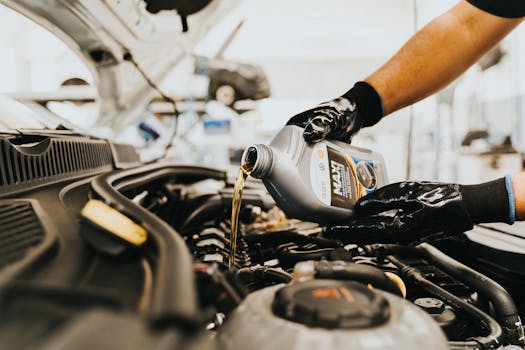
Close-up of a mechanic pouring engine oil into a car engine in an auto repair shop.Photo: Daniel Andraski / Pexels

What Kind of Oil Does My Car Need? The Ultimate Guide

Ensure your engine runs smoothly and extends its lifespan by choosing the perfect oil for your vehicle.

Find Your Car's Oil Now

Key Takeaways

  • ✓ Your car's owner's manual is the definitive source for oil type and viscosity.
  • ✓ Engine oil types include conventional, synthetic blend, full synthetic, and high mileage.
  • ✓ Oil viscosity (e.g., 5W-30) indicates how well the oil flows at different temperatures.
  • ✓ Regular oil changes with the correct oil are crucial for engine longevity and performance.

How It Works

1
Consult Your Owner's Manual

The first and most important step is to check your vehicle's owner's manual. It specifies the exact oil type, viscosity, and certification required by the manufacturer.

2
Understand Oil Types & Viscosity

Familiarize yourself with conventional, synthetic blend, full synthetic, and high mileage oils, and learn what viscosity ratings like 5W-30 mean for your engine's needs and climate.

3
Consider Driving Conditions

Factor in your driving habits and environment. Extreme temperatures, heavy towing, or frequent short trips might influence the best oil choice, even within manufacturer recommendations.

4
Perform Regular Checks & Changes

Once you've identified the right oil, establish a routine for checking oil levels and adhering to the recommended oil change intervals to maintain engine health.

Decoding Your Owner's Manual: The First Step to Choosing Engine Oil

Vintage Auto Expertise book and Peugeot manuals neatly on a shelf.Photo: Mathias Reding / Pexels
When you ask, "what kind of oil does my car need?" the absolute first place to look is your vehicle's owner's manual. This seemingly simple booklet is a treasure trove of critical information, specifically tailored by the engineers who designed your car's engine. It's not just a suggestion; it's a precise recommendation based on exhaustive testing and design specifications. Ignoring it can lead to suboptimal performance, increased wear, and potentially costly engine damage. Inside, you'll find the exact oil viscosity (e.g., 5W-30, 0W-20), the required oil type (conventional, synthetic blend, or full synthetic), and the specific industry certifications (like API or ILSAC) that the oil must meet. These certifications ensure the oil contains the necessary additives and meets performance standards for your engine's protection. For instance, a manual might specify 'API SN Plus or later, ILSAC GF-5 or later, 5W-30 full synthetic.' This isn't just jargon; it's a precise formula for engine longevity. The 'API' (American Petroleum Institute) designation indicates the oil's quality and performance level, with 'S' for 'Spark Ignition' engines (gasoline) and the second letter indicating the performance standard (e.g., N, P). Newer letters signify more stringent standards and better protection. 'ILSAC' (International Lubricant Specification Advisory Committee) ratings, like GF-5 or GF-6, focus on fuel economy and emissions control, which are increasingly important for modern engines. Understanding these designations is paramount. Some manufacturers also have their own proprietary specifications (e.g., GM Dexos, VW 504 00/507 00), which are even more specific and often require a full synthetic oil. Using an oil that doesn't meet these specific requirements, even if it's the correct viscosity, can compromise your engine's warranty and its long-term health. Think of it as providing your engine with the exact nutrition it needs, not just any food. If you've lost your physical manual, don't fret. Most manufacturers provide digital versions on their websites, often accessible by simply entering your car's make, model, and year. Some even have smartphone apps that allow quick access to this vital information. Taking the time to consult this resource is the most reliable way to answer the question, "what kind of oil does my car need?" and ensure your vehicle receives the proper care it deserves. For more detailed insights into specific oil types, check out our guide on engine oil types.

Understanding Oil Viscosity: The 'W' and the Numbers

Close-up of a mechanic pouring engine oil into a car engine in an auto repair shop.Photo: Daniel Andraski / Pexels
Beyond just knowing what kind of oil does my car need in terms of type, understanding viscosity is crucial. The numbers on an oil bottle, such as '5W-30' or '0W-20', represent its viscosity – a measure of its resistance to flow. This isn't just an arbitrary number; it's a carefully calibrated indicator of how the oil performs at different temperatures, which directly impacts engine protection and efficiency. The 'W' in '5W-30' stands for 'Winter', and the number preceding it (e.g., '5') indicates the oil's viscosity at cold temperatures. A lower number here means the oil is thinner when cold, allowing it to flow more easily and quickly lubricate engine parts during a cold start. This is incredibly important because most engine wear occurs during startup, before the oil has fully circulated. In colder climates, a lower 'W' number (like 0W or 5W) is highly beneficial. The second number (e.g., '30') indicates the oil's viscosity at operating temperature, typically 100°C (212°F). A higher number means the oil is thicker at operating temperatures. This thickness is necessary to maintain a protective film between moving engine parts under high heat and stress. However, too thick an oil can increase drag, reducing fuel efficiency and potentially hindering lubrication in tight tolerances. Modern engines, especially those with tighter internal clearances and advanced valve timing systems, often require lower viscosity oils like 0W-20 or 5W-20. These thinner oils reduce internal friction, leading to better fuel economy and meeting stricter emissions standards. Conversely, older engines or those operating in extremely hot climates might benefit from slightly higher viscosity oils like 10W-40, though always defer to your owner's manual first. The term 'multi-grade oil' refers to oils that have been formulated to perform well across a range of temperatures, thinning out less when hot and thickening less when cold than single-grade oils. Almost all passenger car oils today are multi-grade. The additives in multi-grade oils allow them to maintain their protective qualities without becoming too thick in winter or too thin in summer. Choosing the correct viscosity is a delicate balance. Too thick, and it won't circulate quickly enough on startup, leading to wear and reduced fuel economy. Too thin, and it might not provide adequate protection under high operating temperatures and loads, potentially leading to metal-on-metal contact. Always refer to your car's specific recommendations, as using the wrong viscosity can lead to issues ranging from decreased performance to premature engine failure. This is why the question, "what kind of oil does my car need?" extends far beyond just brand or type, delving deep into the science of lubrication.

Exploring Oil Types: Conventional, Synthetic, and Everything In Between

Close-up of a mechanic pouring engine oil into a car engine in an auto repair shop.Photo: Daniel Andraski / Pexels
Understanding the different types of engine oil is paramount when answering "what kind of oil does my car need?" The market offers a variety of options, each with distinct characteristics and benefits. The three primary categories are conventional, synthetic blend, and full synthetic, with high-mileage oil as a specialized variant. Let's break them down: **Conventional Motor Oil:** This is the most basic and typically the least expensive option. Derived from crude oil, it undergoes refining to remove impurities and is then blended with a basic additive package. Conventional oil provides adequate lubrication for older, simpler engine designs and for vehicles with less demanding driving conditions. However, it's more prone to thermal breakdown, oxidation, and sludge formation compared to synthetic alternatives. Its protective qualities diminish faster, necessitating more frequent oil changes, typically every 3,000 to 5,000 miles. While it's suitable for some older vehicles, most modern engines with tighter tolerances and higher operating temperatures are not designed to run on conventional oil. **Synthetic Blend Motor Oil (Semi-Synthetic):** As the name suggests, this is a blend of conventional and synthetic base oils, combined with advanced additive packages. It offers a middle ground between conventional and full synthetic oils in terms of price and performance. Synthetic blends provide enhanced protection against wear, better resistance to thermal breakdown, and improved performance in extreme temperatures compared to conventional oil. They are a good choice for drivers looking for improved engine protection without the full cost of synthetic oil, often extending oil change intervals slightly beyond conventional recommendations. Many vehicle manufacturers specify synthetic blends for their newer models, striking a balance between cost and performance. **Full Synthetic Motor Oil:** This is the pinnacle of engine oil technology. Full synthetic oils are engineered in laboratories, not merely refined from crude oil. They feature highly uniform molecules, leading to superior lubrication, exceptional resistance to thermal breakdown, and significantly reduced friction and wear. Full synthetics excel in extreme temperatures, both hot and cold, maintaining their viscosity and protective film under the harshest conditions. They are also highly resistant to sludge and deposit formation, keeping your engine cleaner. Most modern, high-performance, and turbocharged engines explicitly require full synthetic oil due to their demanding operating conditions. While more expensive upfront, full synthetic oil often allows for extended oil change intervals (up to 10,000-15,000 miles or more, depending on the vehicle and manufacturer), potentially saving money and time in the long run. The enhanced protection and cleanliness can also contribute to a longer engine life and better fuel economy. For those seeking the best possible protection and performance, full synthetic is the clear choice. **High-Mileage Motor Oil:** This specialized oil is designed for vehicles with over 75,000 miles. It can be conventional, synthetic blend, or full synthetic, but it contains specific additives formulated to address issues common in older engines. These additives include seal conditioners to prevent leaks, extra detergents to combat sludge buildup, and anti-wear agents to protect worn engine parts. High-mileage oils can help rejuvenate older engines, reduce oil consumption, and extend their operational life. If your car has many miles on the odometer, considering a high-mileage option that still meets your manual's viscosity and certification requirements is a smart move. For a deeper dive into the specific benefits of full synthetic oil, you might want to read our article on synthetic oil advantages. Choosing the right type of oil is not just about cost; it's about matching the oil to your engine's design, age, and operating conditions. Always prioritize your owner's manual's recommendations above all else, as using an incorrect oil type can negate its benefits and potentially harm your engine.

Common Mistakes and Smart Tips for Engine Oil Longevity

Close-up of a mechanic pouring engine oil into a car engine in an auto repair shop.Photo: Daniel Andraski / Pexels
Navigating the world of engine oil can be tricky, and making the wrong choices can shorten your engine's life. Here are some common mistakes to avoid and smart tips to ensure your engine runs optimally: **Common Mistakes to Avoid:** * **Ignoring the Owner's Manual:** This is the most critical mistake. Your car manufacturer's engineers know best what your engine needs. Deviating from their recommendations for oil type, viscosity, or certification is a gamble. * **Overlooking Oil Change Intervals:** Sticking to a rigid 'every 3,000 miles' rule without checking your manual or modern oil life monitoring systems can lead to premature changes (wasting money) or, worse, extending changes too long (damaging the engine). Modern synthetic oils can often go much longer. * **Mixing Different Oil Types:** While generally not catastrophic in small amounts, consistently mixing conventional with synthetic oils can dilute the benefits of the synthetic and might lead to unpredictable performance from the additive packages. * **Not Checking Oil Level Regularly:** Even the best oil can't protect an engine if the level is too low. Engines naturally consume some oil. Failing to top off can lead to severe engine damage. * **Buying the Cheapest Oil Available:** While budget is a concern, compromising on oil quality to save a few dollars can cost you thousands in engine repairs down the line. Always ensure the oil meets your car's specified certifications. * **Assuming All 'Synthetic' Oils Are Equal:** The term 'synthetic' can be broad. Always check for specific API, ILSAC, and manufacturer certifications to ensure the oil truly meets your vehicle's requirements. **Smart Tips for Engine Oil Longevity:** * **Adhere to Manufacturer Specifications:** This cannot be stressed enough. It's the golden rule for engine oil. If your manual says 0W-20 full synthetic, use exactly that. * **Monitor Your Oil Life Monitor (If Equipped):** Many modern cars have an Oil Life Monitor (OLM) system that calculates oil change intervals based on driving conditions. Trust this system as it's more accurate than a fixed mileage interval. * **Check Your Oil Level Monthly:** Get into the habit of checking your oil level at least once a month, or before long trips. Ensure your car is on level ground and the engine has been off for at least 10-15 minutes (or cold, depending on manufacturer instructions) to get an accurate reading. * **Consider Your Driving Habits:** If you frequently drive in extreme conditions (very hot/cold, heavy traffic, towing, dusty environments), you might consider slightly more frequent oil changes or opting for a higher-performance oil within your manufacturer's recommended range. * **Use Quality Oil Filters:** The oil filter is just as important as the oil itself. A cheap, inefficient filter can negate the benefits of premium oil. Invest in a quality filter that meets or exceeds OEM specifications. * **Keep Records:** Maintain a log of your oil changes, including the date, mileage, and type of oil used. This is invaluable for warranty purposes and tracking your car's maintenance history. By avoiding these common pitfalls and adopting these smart practices, you'll significantly extend your engine's life, maintain its performance, and save money on potential repairs in the long run. Your car will thank you for it!

Comparison

FeatureFull SyntheticSynthetic BlendConventionalHigh Mileage (Any Base)
Base OilChemically EngineeredBlend of Conventional & SyntheticRefined Crude OilVarious
Cost (Relative)HighestMediumLowestMedium-High
Protection in ExtremesExcellentGoodFairGood (with additives)
Resistance to SludgeExcellentGoodFairGood (with detergents)
Oil Change IntervalLongest (7,500-15,000+ miles)Medium (5,000-7,500 miles)Shortest (3,000-5,000 miles)Varies (similar to base type)
Fuel Economy BenefitsHighestModerateLowestModerate
Good for Modern Engines✓ (if meets spec)
Recommended for 75k+ Miles✗ (unless specific high-mileage synthetic)✗ (unless specific high-mileage synthetic)✗ (unless specific high-mileage conventional)

What Our Readers Say

5 ★★★★★

"This guide truly answered my question, 'what kind of oil does my car need?' I always just bought what the quick lube place recommended, but now I understand the viscosity numbers and synthetic types. My engine feels smoother already!"

5 ★★★★★

"As an amateur mechanic, I appreciated the depth of this article. It confirmed my understanding of full synthetics and provided great tips for checking oil levels. Excellent resource for anyone asking what kind of oil does my car need."

5 ★★★★★

"After reading this, I realized I was using the wrong oil for my car's high mileage. Switched to a high-mileage synthetic blend as recommended by my manual and this guide. My engine has stopped consuming as much oil, which is a huge relief!"

4 ★★★★☆

"Very informative, though I wish there was a quick lookup tool for specific car models. Still, it explained the 'W' numbers and API ratings clearly, which helped me confidently choose the right oil for my cold starts."

5 ★★★★★

"Living in extreme heat, I was always worried about engine wear. This article on what kind of oil does my car need helped me understand why full synthetic is crucial for my climate, and I've noticed better engine performance since switching."

Frequently Asked Questions

What is the absolute best way to find out what kind of oil my car needs?
The absolute best and most reliable way is to consult your vehicle's owner's manual. It contains precise specifications for oil type (conventional, synthetic blend, full synthetic), viscosity (e.g., 5W-30), and required industry certifications (API, ILSAC, or specific manufacturer standards) that are tailored to your engine's design and operating parameters. This information is non-negotiable for optimal engine health and warranty compliance.
Can I switch from conventional to synthetic oil, or vice versa?
Yes, generally you can switch between conventional and synthetic oils. Modern oils are fully compatible, and mixing them won't cause damage. However, if your car's manual specifies synthetic oil, it's best to stick with it to ensure proper lubrication and protection for your engine's design. Switching from synthetic to conventional might reduce protection, especially in modern engines.
How often should I change my car's oil?
The oil change interval varies significantly based on your car's make and model, the type of oil used, and your driving conditions. Always refer to your owner's manual for specific recommendations. Many modern cars with full synthetic oil can go 7,500 to 15,000 miles, while older cars with conventional oil might need changes every 3,000 to 5,000 miles. Many vehicles also have an 'Oil Life Monitor' system that provides dynamic recommendations.
Is full synthetic oil worth the extra cost?
For most modern vehicles, especially those with turbocharged engines or operating under demanding conditions, full synthetic oil is absolutely worth the extra cost. It offers superior protection against wear, better performance in extreme temperatures, and increased resistance to sludge and deposits, which can lead to extended engine life and often longer oil change intervals, potentially balancing out the higher upfront price.
What's the difference between 5W-30 and 0W-20 oil?
These numbers denote oil viscosity. The 'W' (Winter) number (5W vs. 0W) indicates how thin the oil is at cold temperatures; 0W-20 will be thinner when cold, allowing for faster lubrication during cold starts. The second number (30 vs. 20) indicates the oil's viscosity at operating temperature; 0W-20 is thinner when hot than 5W-30. Modern engines often require lower viscosity oils like 0W-20 for better fuel economy and reduced internal friction.
Who should use high-mileage motor oil?
High-mileage motor oil is specifically formulated for vehicles with over 75,000 miles. It contains special additives like seal conditioners to prevent leaks, extra detergents to clean out sludge, and anti-wear agents to protect aging engine components. If your car has reached this mileage, and the high-mileage oil meets your manufacturer's viscosity and certification requirements, it can be an excellent choice to extend engine life and address common age-related issues.
Can using the wrong kind of oil damage my engine?
Yes, using the wrong kind of oil can absolutely damage your engine. Incorrect viscosity can lead to inadequate lubrication, increased wear, and reduced fuel efficiency. Using a conventional oil when synthetic is required can cause premature breakdown, sludge buildup, and potential engine failure. Always follow your owner's manual to avoid costly repairs and maintain your vehicle's warranty.
Are there any future trends in engine oil technology I should be aware of?
Future trends in engine oil technology are largely driven by stricter emissions regulations and the demand for improved fuel economy. Expect to see more ultra-low viscosity oils (like 0W-16 and even 0W-8) becoming standard, along with advancements in additive packages that target specific engine technologies like gasoline direct injection (GDI) to combat issues like low-speed pre-ignition (LSPI). Full synthetic oils will continue to dominate the market.

Understanding what kind of oil does my car need is a fundamental aspect of responsible vehicle ownership. By prioritizing your owner's manual, understanding oil types and viscosity, and adopting smart maintenance habits, you're investing in the longevity and performance of your vehicle. Make the informed choice today and give your engine the precise care it deserves.

Topics: what kind of oil does my car needengine oil typesoil viscosity explainedsynthetic vs conventional oilcar oil change guide
Leo List
Brampton weed
Adultwork