✓ Modern vehicles contain over 30,000 individual parts.
✓ The engine, transmission, and braking system are among the most critical components.
✓ Regular maintenance of common car parts extends vehicle lifespan and ensures safety.
✓ Understanding basic car parts can save you money on repairs and improve driving experience.
How It Works
1
Understand the Major Systems
Familiarize yourself with the primary categories of car parts: engine, transmission, suspension, braking, electrical, and chassis. Each system has a distinct function crucial for vehicle operation.
2
Identify Key Components
Within each system, learn to recognize the most frequently serviced or critical parts, such as spark plugs, oil filters, brake pads, and tires. This knowledge aids in routine checks and early problem detection.
3
Learn Their Functions
Grasp what each part does and how it contributes to the vehicle's overall performance and safety. Understanding function helps you diagnose issues and appreciate the interconnectedness of systems.
4
Practice Basic Inspection
Regularly inspect accessible parts like fluid levels, tire pressure, and lights. This proactive approach can prevent minor issues from escalating into major, costly repairs.
The Heart of Your Ride: Engine Components Explained
Photo: Artem Podrez / Pexels
At the core of every gasoline-powered vehicle lies the internal combustion engine, a complex marvel of engineering responsible for converting fuel into mechanical energy. Understanding its fundamental components is crucial for any car owner. The engine block, often made of cast iron or aluminum, forms the main structure, housing the cylinders where combustion occurs. Inside these cylinders, pistons move up and down, connected to the crankshaft by connecting rods. The crankshaft rotates, translating the linear motion of the pistons into rotational energy that ultimately drives the wheels. Above the engine block sits the cylinder head, which contains the valves that control the intake of air and fuel and the exhaust of combustion gases. The camshaft, driven by a timing chain or belt, operates these valves in precise synchronization with the piston movement.
Another critical component is the oil pan, located at the bottom of the engine, which stores the engine oil essential for lubricating moving parts and dissipating heat. The oil pump circulates this vital fluid throughout the engine. The fuel system delivers gasoline from the tank to the engine, typically involving a fuel pump, fuel filter, and fuel injectors that atomize the fuel into the combustion chambers. The ignition system, comprising spark plugs, ignition coils, and often a distributor (in older vehicles), creates the spark necessary to ignite the air-fuel mixture. The cooling system, featuring a radiator, water pump, and thermostat, prevents the engine from overheating by circulating coolant. Lastly, the exhaust system, including the exhaust manifold, catalytic converter, and muffler, channels spent gases away from the engine, reduces emissions, and dampens noise. Each of these parts plays an indispensable role in the engine's operation, and their collective health dictates the vehicle's performance and longevity. Regular maintenance, such as oil changes and spark plug replacements, directly impacts the efficiency and lifespan of these vital components. For more detailed information on engine care, you might find our guide on car maintenance essentials helpful.
Power Transfer: Transmission and Drivetrain Elements
Photo: Mustafa Fatemi / Pexels
Beyond the engine, the transmission and drivetrain are responsible for transferring the engine's power to the wheels, allowing the car to move and change speeds. The transmission, whether manual or automatic, is a gearbox that adjusts the engine's rotational speed and torque to match the vehicle's speed and load requirements. In a manual transmission, the driver uses a clutch pedal and gear stick to manually select gears, engaging and disengaging power to the wheels. Key components include the clutch plate, pressure plate, flywheel, and various gears. Automatic transmissions, on the other hand, use a torque converter and planetary gear sets to automatically shift gears, providing a smoother, more convenient driving experience. The torque converter acts as a fluid coupling, transferring power from the engine to the transmission.
From the transmission, power is sent through the driveshaft (or prop shaft), a rotating component that transmits torque to the differential. In front-wheel-drive vehicles, this power goes directly to the transaxle, which combines the transmission and differential into a single unit. The differential, found in both front- and rear-wheel-drive cars, allows the wheels on the same axle to rotate at different speeds, which is crucial when turning corners. Without it, the wheels would skid as they try to cover different distances. From the differential, half-shafts (also known as axle shafts) extend to the wheels, delivering the final power. These shafts often incorporate constant velocity (CV) joints, which allow for a flexible connection that accommodates the suspension's movement and steering angle while maintaining a constant rotational speed. The entire drivetrain system must work in harmony to efficiently deliver power, ensuring smooth acceleration and reliable performance. Neglecting transmission fluid changes or ignoring unusual noises can lead to costly repairs, emphasizing the importance of understanding these critical power transfer components.
Ensuring Safety and Comfort: Braking and Suspension Systems
Photo: Lex Ger / Pexels
The braking and suspension systems are paramount for both safety and driving comfort. The braking system is designed to slow down or stop the vehicle reliably. It begins with the brake pedal, which, when pressed, activates a master cylinder. This master cylinder converts the pedal's mechanical force into hydraulic pressure, which is then transmitted through brake lines filled with brake fluid to the calipers (for disc brakes) or wheel cylinders (for drum brakes) at each wheel. Disc brakes, common on modern vehicles, consist of a rotor (a metal disc) that spins with the wheel and a caliper that clamps brake pads onto the rotor, creating friction to slow the wheel. Drum brakes, often found on the rear wheels of older or less expensive cars, use brake shoes that press against the inside of a spinning drum. The anti-lock braking system (ABS) is a crucial safety feature that prevents the wheels from locking up during hard braking, allowing the driver to maintain steering control. This system uses sensors to monitor wheel speed and modulate brake pressure as needed.
Equally vital is the suspension system, which absorbs shocks from the road, keeps the tires in contact with the road surface, and maintains vehicle stability. Key components include springs (coil springs, leaf springs, or torsion bars) that support the vehicle's weight and absorb vertical impacts. Shock absorbers (or struts, which combine a shock absorber and spring into one unit) dampen the oscillation of the springs, preventing the car from bouncing uncontrollably. Control arms connect the wheel hub to the vehicle's frame, allowing for vertical movement while maintaining alignment. Ball joints provide pivot points for steering and suspension movement, while tie rods connect the steering rack to the steering knuckles, allowing the wheels to turn. Sway bars (or anti-roll bars) reduce body roll during cornering, improving stability. A well-maintained suspension ensures a comfortable ride, precise handling, and optimal tire wear, making these components critical for overall driving experience and safety. Regular inspection of brake pads, fluid levels, and suspension components is essential for preventing dangerous situations and costly repairs. Learn more about maintaining these systems in our comprehensive guide to essential car care.
Electrical, Steering, and Chassis: Critical Support Structures
Beyond the major mechanical systems, a car relies heavily on its electrical system, steering mechanism, and the foundational chassis. The electrical system is the nervous system of the vehicle, powering everything from the engine's ignition to the infotainment system. Its core components include the battery, which provides the initial surge of power to start the engine and acts as a reserve power source. The alternator recharges the battery while the engine is running and supplies power to the car's electrical systems. The starter motor engages the flywheel to crank the engine. Fuses and relays protect circuits from overloads, while a complex network of wiring harnesses connects all electrical components. Modern vehicles also incorporate numerous sensors and an Engine Control Unit (ECU) or Powertrain Control Module (PCM), which acts as the 'brain,' monitoring and controlling various engine and transmission functions.
The steering system allows the driver to control the direction of the vehicle. Most modern cars use a rack-and-pinion steering system, where the steering wheel's rotation is translated into linear motion by a pinion gear meshing with a toothed rack. This linear motion is then transferred via tie rods to the steering knuckles, which turn the wheels. Power steering, whether hydraulic or electric, assists the driver in turning the wheels with less effort.
The chassis, often referred to as the frame, is the underlying structure that supports the engine, transmission, body, and other components. It provides rigidity and strength, protecting occupants in a collision. The wheels and tires are the only parts of the car that touch the road, making them critical for traction, braking, and steering. Tires come in various types (all-season, summer, winter) and must be properly inflated and maintained for safety and performance.
**Common Mistakes to Avoid:**
* **Ignoring Warning Lights:** Dashboard warning lights are your car's way of communicating problems. Don't dismiss them.
* **Skipping Fluid Checks:** Engine oil, brake fluid, coolant, and transmission fluid are vital. Check them regularly.
* **Neglecting Tire Pressure:** Improper tire pressure affects handling, fuel economy, and tire lifespan.
* **Delaying Brake Service:** Worn brake pads or rotors compromise safety significantly.
* **Overlooking Odd Noises or Vibrations:** These are often early indicators of mechanical issues that can worsen if ignored.
* **Using Incorrect Parts or Fluids:** Always use parts and fluids specified by the manufacturer for optimal performance and longevity.
Comparison
Feature
Engine Oil
Brake Fluid
Coolant
Transmission Fluid
Function
Lubrication, cooling
Hydraulic pressure
Heat transfer
Lubrication, heat transfer
Service Interval
5,000-10,000 miles
2-3 years
30,000-100,000 miles
30,000-100,000 miles
Check Frequency
Monthly
Every 6 months
Monthly
Every 6 months
Safety Critical
✓
✓
✓
✗
What Readers Say
★★★★★
"This article on what are common car parts was incredibly insightful! I always felt overwhelmed by car mechanics, but this broke it down into understandable sections. Now I feel much more confident talking to my mechanic about my vehicle's needs."
Sarah J. · Austin, TX
★★★★★
"As a new car owner, I needed a reliable resource to understand my vehicle. This guide delivered! The explanations of the engine and transmission components were particularly helpful and easy to follow. A truly premium article."
David L. · Miami, FL
★★★★★
"I've been driving for years, but never truly understood the 'why' behind certain car sounds or maintenance. After reading this, I've identified why my car was making a particular noise (suspension issue!) and got it fixed, saving me from a bigger problem down the line."
Maria K. · Seattle, WA
★★★★★
"A very comprehensive overview of what are common car parts. While some sections were a bit technical for a complete novice, the overall structure and key facts made it accessible. I appreciate the detailed breakdown of each major system."
Tom R. · Denver, CO
★★★★★
"This article should be required reading for anyone buying a car! It demystified so many components I'd only heard names of. The 'Common Mistakes to Avoid' section alone is worth its weight in gold for preventing expensive blunders."
Jessica P. · Chicago, IL
Frequently Asked Questions
What is the most critical car part for safety?
While all car parts contribute to safety, the braking system is arguably the most critical. Functional brakes are essential for stopping the vehicle, preventing accidents, and ensuring the well-being of occupants and others on the road. Regular inspection and maintenance of brake pads, rotors, fluid, and lines are non-negotiable for safe driving.
Is it really necessary to understand car parts if I just take my car to a mechanic?
While a mechanic handles the repairs, having a basic understanding of what are common car parts empowers you as a car owner. It allows you to better communicate issues to your mechanic, understand the diagnostics, make informed decisions about repairs, and even identify potential problems early, potentially saving you money and preventing breakdowns.
How often should I check my car's fluid levels?
It's generally recommended to check your engine oil and coolant levels at least once a month, or before any long road trip. Brake fluid and power steering fluid (if applicable) can be checked every few months. Always refer to your car's owner's manual for specific recommendations tailored to your vehicle model.
Are aftermarket car parts as good as OEM (Original Equipment Manufacturer) parts?
The quality of aftermarket parts can vary significantly. Some aftermarket parts are designed to meet or exceed OEM specifications and can offer a cost-effective alternative. However, others may be of lower quality or not fit perfectly. OEM parts are identical to those installed in your car at the factory, ensuring perfect fit and function, but often come at a higher price. It's best to research reputable aftermarket brands or consult with a trusted mechanic.
What's the difference between a shock absorber and a strut?
Both shock absorbers and struts are components of the suspension system designed to dampen spring oscillations and absorb road impacts. A shock absorber is a standalone component. A strut, however, is a more complex assembly that combines the shock absorber with a coil spring and often serves as a structural component of the vehicle's suspension, supporting its weight and connecting to the steering knuckle. Many modern vehicles use struts, especially in the front.
Who should prioritize learning about common car parts?
Anyone who owns or drives a car can benefit greatly. New drivers, first-time car owners, those looking to save on repair costs, individuals interested in DIY maintenance, and anyone who wants to feel more confident and less vulnerable at the auto shop should prioritize understanding what are common car parts.
Can ignoring a small car part issue lead to a bigger problem?
Absolutely. Many minor issues, if left unaddressed, can quickly escalate into major, expensive repairs. For example, a worn-out serpentine belt can lead to a dead battery or an overheated engine, while a minor brake squeak can turn into complete brake failure. Early detection and repair are key to preventing cascading damage and ensuring safety.
How are car parts likely to evolve in electric vehicles (EVs)?
EVs have significantly fewer moving parts than traditional gasoline cars. The engine and transmission are replaced by an electric motor and a single-speed gearbox. Fuel systems, exhaust systems, and many complex engine components are eliminated. However, new critical parts emerge, such as large battery packs, electric motors, power inverters, and advanced thermal management systems unique to EVs. The electrical system also becomes even more central and complex.
Understanding what are common car parts is an investment in your vehicle's longevity, your safety, and your peace of mind. Empower yourself with this knowledge, perform regular checks, and drive confidently knowing the essential components that keep you moving. Stay informed, stay safe on the road.

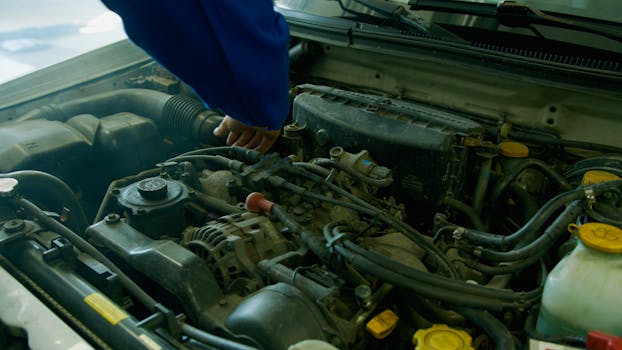 Photo: Artem Podrez / Pexels
 Photo: Mustafa Fatemi / Pexels
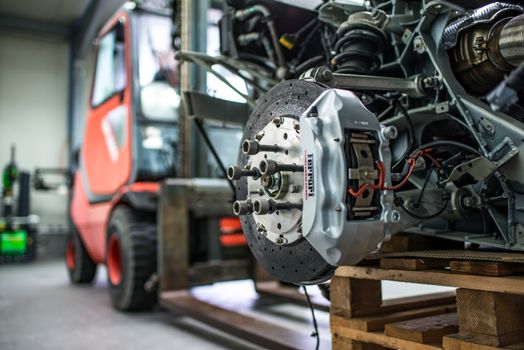 Photo: Lex Ger / Pexels