
How to Find Car Parts by VIN Number: The Ultimate Guide
how to find car parts by vin number

How to Find Car Parts by VIN Number: The Ultimate Guide

Discover how your VIN is the key to precisely identifying and sourcing the right car parts, every single time.

Find My Parts Now

Key Takeaways

  • ✓ The VIN (Vehicle Identification Number) is a unique 17-character code for every vehicle.
  • ✓ Using a VIN for parts lookup guarantees compatibility, preventing costly errors.
  • ✓ Most online auto parts retailers offer VIN-based search functionalities.
  • ✓ Your VIN is located on your dashboard, driver's side door jamb, and vehicle registration.

How It Works

1
Locate Your Vehicle's VIN

Find the 17-character VIN on your dashboard (driver's side), door jamb, or registration documents. Ensure you copy it accurately.

2
Choose a Reliable Parts Source

Select an online auto parts retailer, dealership website, or local parts store that supports VIN-based searches. Quality sources are key.

3
Enter Your VIN for Lookup

Navigate to the VIN lookup tool on your chosen platform and input your vehicle's VIN. The system will identify your specific make and model.

4
Browse & Select Compatible Parts

Once your vehicle is identified, you can browse parts categories and be confident that the results shown are compatible with your exact car. Double-check part descriptions.

Understanding the Power of Your Vehicle Identification Number (VIN)
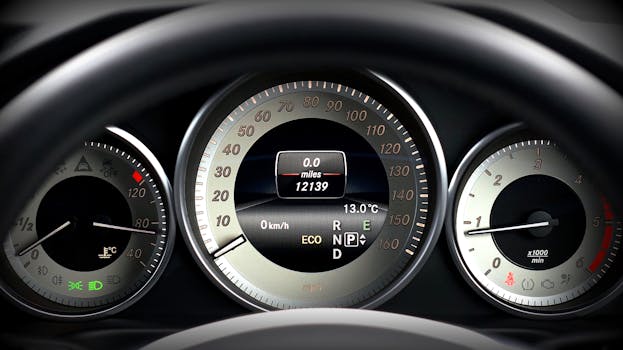
Close-up image of a car dashboard highlighting speedometer, odometer, and temperature gauge. Photo: Auto Photographer / Pexels
The Vehicle Identification Number, or VIN, is far more than just a string of characters; it's the unique DNA of your car. This 17-character alphanumeric code acts as a universal identifier, providing a comprehensive history and detailed specifications for any vehicle manufactured after 1981. Each segment of the VIN holds specific information, encoding details about the manufacturer, brand, engine type, model year, assembly plant, and even specific features or safety recalls. Understanding the VIN's structure reveals its immense value, especially when it comes to vehicle maintenance and repairs. Without it, you're often left guessing or relying on generic descriptions which can lead to costly mistakes. The complexity of modern vehicles means that even slight variations in model year, engine size, or trim level can necessitate entirely different parts. For instance, a brake rotor for a 2015 Honda Civic might differ significantly from a 2016 model, or even between two 2015 models with different engine configurations. The VIN eliminates this ambiguity, acting as a direct link to the precise specifications of your car as it left the factory. This unparalleled precision is why knowing how to find car parts by VIN number is an indispensable skill for any car owner, DIY mechanic, or professional technician. It's the first step towards ensuring perfect fitment, optimal performance, and ultimately, the longevity of your vehicle. Relying on the VIN for parts identification safeguards against the frustration of ordering incorrect components and the subsequent delays and expenses of returns and reorders. It simplifies what can often be a complex and daunting task, transforming it into a streamlined and accurate process. The accuracy provided by a VIN lookup extends beyond just major mechanical components; it's crucial for everything from exterior trim pieces to interior electronics, where subtle design changes often dictate specific part numbers. This system was developed to standardize vehicle identification globally, making it easier for manufacturers, law enforcement, and consumers alike to track and identify vehicles with absolute certainty. Embracing the VIN as your primary tool for parts acquisition is not just a convenience; it's a strategic move that saves time, money, and prevents unnecessary headaches in the long run. It empowers you to make informed decisions about your vehicle's care, ensuring that every replacement part is an exact match for your specific make and model, as intended by the original equipment manufacturer. This level of detail is what makes the VIN the cornerstone of reliable auto parts sourcing.

Step-by-Step Guide: How to Find Car Parts by VIN Number Online

A neat workspace featuring a laptop displaying Google search, a smartphone, and a notebook on a wooden desk. Photo: Caio / Pexels
Finding car parts by VIN number online has become the most efficient and reliable method for securing the correct components for your vehicle. The process is remarkably straightforward, but precision is paramount at each stage. First, accurately locate your vehicle's VIN. As mentioned, it's typically found on the driver's side dashboard (visible through the windshield), on the driver's side door jamb sticker, or on your vehicle's registration and insurance documents. Carefully transcribe all 17 characters, paying close attention to distinguishing between similar-looking characters like '0' and 'O' or '1' and 'I'. Even a single incorrect character can lead to an erroneous lookup. Once you have your VIN, the next step is to choose a reputable online auto parts retailer. Major players like AutoZone, Advance Auto Parts, NAPA Auto Parts, RockAuto, and even official dealership websites all offer robust VIN lookup tools. Each platform will have a dedicated section, usually labeled 'VIN Search,' 'Find Parts by VIN,' or similar, prominently displayed on their homepage or within their search filters. Navigate to this section and input your 17-character VIN into the designated field. After entering the VIN, the system will process the information and display your specific vehicle's make, model, year, engine size, and trim level. This confirmation step is critical; always double-check that the vehicle identified by the website matches your car exactly. If there's any discrepancy, re-enter your VIN carefully or try a different platform. Once your vehicle is correctly identified, you can then proceed to browse for parts. The website's catalog will now be filtered to show only parts compatible with your specific vehicle. You can search by part category (e.g., 'brakes,' 'engine,' 'suspension'), or by a specific part name (e.g., 'alternator,' 'spark plugs'). Each part listing should clearly indicate compatibility. Some sites even offer exploded diagrams or schematics to help you pinpoint the exact component you need. Always review the product description, part number, and any additional notes to ensure it aligns with your requirements. For instance, some parts may have specific fitments based on manufacturing dates within the same model year. When in doubt, don't hesitate to utilize the retailer's customer support or live chat features. They can often provide additional verification or guidance, particularly for complex components. This systematic approach to how to find car parts by VIN number online not only saves you from purchasing incorrect parts but also streamlines the entire repair process, getting you back on the road faster and with greater confidence in your vehicle's performance.

Beyond Online: Local Auto Parts Stores and Dealerships for VIN Lookups
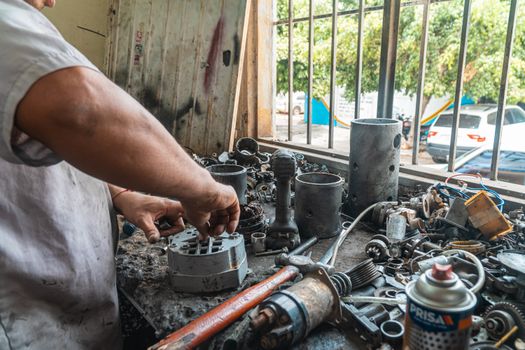
Close-up of a mechanic's hands working with car parts on a workshop table. Photo: Jose Ricardo Barraza Morachis / Pexels
While online resources offer unparalleled convenience, local auto parts stores and dealerships remain invaluable assets when you need to find car parts by VIN number, especially for urgent repairs or when you prefer hands-on assistance. These physical locations often boast experienced staff who can provide personalized guidance and expertise that online platforms might lack. When visiting a local auto parts store, such as an O'Reilly Auto Parts or Pep Boys, always come prepared with your VIN. Most counter staff will immediately ask for it, as it's their primary tool for accurate parts identification. They will input your VIN into their proprietary systems, which often have direct links to manufacturer databases or extensive aftermarket cross-referencing tools. This allows them to quickly pull up schematics, part numbers, and availability for your specific vehicle. The advantage here is the immediate gratification of walking out with the part you need, avoiding shipping delays. Moreover, for trickier components or those with multiple variations, the staff can often offer insights based on common issues for your specific make and model, or even show you physical examples of parts to compare. Dealerships, on the other hand, offer an even higher level of specialized service. When you use your VIN at a dealership's parts counter, you're accessing the original equipment manufacturer (OEM) parts catalog directly. This guarantees that the parts you receive are identical to those installed on your vehicle at the factory. While OEM parts can sometimes be more expensive than aftermarket alternatives, they offer unmatched quality, fit, and often come with a manufacturer's warranty. Dealerships are particularly useful for obscure parts, highly specialized components (like transmission control modules or specific sensors), or when you're dealing with a complex diagnostic issue where precise OEM specifications are critical. The staff at dealerships are factory-trained and possess an intimate knowledge of their specific brands, making them an excellent resource for any part-related query. They can also advise on any service bulletins or recalls that might affect your part selection. Whether you choose a local auto parts store or a dealership, bringing your VIN ensures that you're tapping into the most accurate and reliable parts identification systems available. It minimizes the risk of human error and ensures that you get the right part the first time, saving you the hassle of returns and ensuring your repair is completed efficiently. This direct interaction with knowledgeable staff and access to specialized databases makes finding car parts by VIN number in person a robust alternative or complement to online searches, providing peace of mind and expert support for your automotive needs.

Common Mistakes to Avoid When Using Your VIN for Parts Lookup
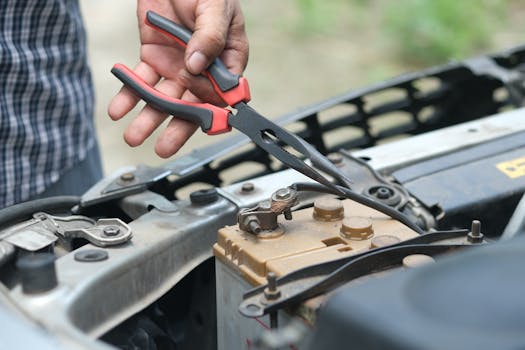
Person using pliers to check a car battery in an outdoor setting. Photo: Towfiqu barbhuiya / Pexels
While using your VIN to find car parts is incredibly effective, several common mistakes can undermine its accuracy and lead to frustration. Being aware of these pitfalls can save you significant time and money. The most frequent error is an incorrect VIN transcription. The VIN is a 17-character alphanumeric code, and it's easy to mix up similar-looking characters like the number '0' and the letter 'O', or '1' and 'I'. Always double-check, and even triple-check, the VIN you input against the one on your vehicle or documents. A single incorrect character can pull up an entirely different vehicle's parts catalog, leading to ordering incompatible components. Another mistake is assuming that all parts for a given make and model year are interchangeable. Even with a correct VIN, some parts have variations based on specific trim levels, optional packages, or even the date of manufacture within the same model year. For example, a base model might have different brake components than a sport trim, or a car manufactured in January might have a different electrical module than one built in July of the same year. Always read the part description carefully, looking for specific notes about compatibility or prerequisites. If a part description mentions 'without sport package' or 'for vehicles built after MM/DD/YYYY', pay close attention to these details. Ignoring these nuances can result in a part that technically fits your vehicle's general profile but isn't the exact match for your specific configuration. Furthermore, some individuals neglect to verify the vehicle information returned by the VIN lookup tool. After entering your VIN on an online retailer's site, the system will typically display your car's make, model, year, and engine. Always confirm that this information precisely matches your vehicle. If it doesn't, it indicates an incorrect VIN entry or a system error, and you should re-enter the VIN or try a different search method. Don't proceed with parts selection if the identified vehicle is inaccurate. Finally, relying solely on generic search terms instead of leveraging the VIN's full potential is another missed opportunity. While you can search for 'Honda Civic brake pads,' using your VIN first will ensure that the brake pads displayed are specifically for your Civic's exact model year, engine size, and trim, removing any guesswork. By avoiding these common errors, you can fully harness the power of your VIN to ensure precise and efficient car part acquisition, making your repair process smoother and more successful.

Comparison

FeatureVIN Lookup (Online)VIN Lookup (Dealership)Manual Search (Online)Manual Search (Local Store)
AccuracyExcellentSuperiorGood (Prone to errors)Good (Relies on staff expertise)
ConvenienceHighMediumHighMedium
Part AvailabilityVast (Aftermarket & OEM)OEM SpecificVast (Less filtered)Limited by stock
Expert GuidanceLimited (Chat/Email)High (Factory Trained)NoneHigh (Experienced Staff)
Time to Acquire Part1-5 Days (Shipping)Immediate (If in stock)1-5 Days (Shipping)Immediate (If in stock)
CostCompetitive (Aftermarket options)Often Higher (OEM)Competitive (Risk of wrong part)Standard Retail

What Readers Say

"Using my VIN to find parts was a game-changer! I always struggled to get the right brake pads for my specific trim, but with the VIN lookup, it was effortless and perfectly accurate. No more returns!"

Sarah J. · Austin, TX

"I used to guess which spark plugs my car needed. After learning how to find car parts by VIN number, I got the exact OEM-recommended ones on the first try. My engine runs so much smoother now."

Mark D. · Miami, FL

"I needed a new headlight assembly and the VIN lookup confirmed the correct part number, saving me a trip to the dealership and ensuring I bought the right one online. Perfect fit!"

Jessica L. · Denver, CO

"The VIN lookup works great for most parts. I did encounter one instance where a specific sensor had multiple OEM versions for my model year, but cross-referencing with a forum helped clarify. Still, it's the best starting point."

Kevin S. · Chicago, IL

"As a DIYer, getting the right parts is crucial. The VIN tool made ordering suspension components for my older truck incredibly easy, matching everything perfectly despite its age. Highly recommend this method!"

Emily R. · Seattle, WA

Frequently Asked Questions

What is a VIN and why is it important for finding car parts?

A VIN (Vehicle Identification Number) is a unique 17-character alphanumeric code that identifies a specific vehicle. It's crucial for finding car parts because it encodes precise details about your car's make, model, year, engine, and trim, ensuring that any part you look up is 100% compatible with your exact vehicle.

Can I trust aftermarket parts found using my VIN?

Yes, reputable aftermarket parts found using your VIN are generally trustworthy. The VIN lookup ensures compatibility, and many aftermarket brands produce high-quality parts that meet or exceed OEM specifications. Always research the brand and check reviews, but the VIN will confirm fitment.

How do I find my VIN number on my car?

Your VIN can be found in several places: on the driver's side dashboard (visible through the windshield), on a sticker on the driver's side door jamb, on your vehicle's registration card, and on your auto insurance policy documents. Ensure you copy all 17 characters correctly.

Does using my VIN for parts lookup cost money?

No, using your VIN to look up parts on most online auto parts retailers or at a physical store's counter is typically free. These services are provided as a convenience to help you find the correct parts. You only pay for the parts you purchase.

Is using a VIN better than searching by make and model only?

Absolutely. Searching by VIN is far superior to using only make and model. Make and model searches can return many variations due to different engine types, trim levels, and manufacturing dates. The VIN precisely filters these options, guaranteeing you find the exact part for your specific vehicle.

Who should use their VIN to find car parts?

Anyone looking to purchase car parts, whether for DIY repairs, professional service, or simply to understand their vehicle's components, should use their VIN. It's especially beneficial for owners of less common vehicles, or those with multiple trim levels or engine options.

Are there any security risks associated with sharing my VIN for parts lookup?

No, sharing your VIN for the purpose of finding car parts is generally not a security risk. The VIN is publicly accessible on your vehicle and in documents. While it provides vehicle specifications, it does not contain personal identifying information about the owner.

Will VIN lookup tools evolve in the future?

Yes, VIN lookup tools are expected to become even more sophisticated, potentially integrating with augmented reality for visual part identification, or offering more predictive maintenance suggestions based on vehicle history linked to the VIN. Data analytics will likely enhance accuracy and user experience.

Mastering how to find car parts by VIN number is a vital skill for any vehicle owner. By leveraging this unique identifier, you ensure perfect fitment, save time, and avoid costly mistakes, making your automotive maintenance and repair journey smoother and more efficient. Start using your VIN today for unparalleled accuracy.

Topics: how to find car parts by vin numberVIN lookup auto partsvehicle identification number partscar parts by VINaccurate car parts
Leo List

DK Escorts LU Escorts AT Escorts SE Escorts FI Escorts CH Escorts DE Escorts HR Escorts IE Escorts GR Escorts CZ Escorts NO Escorts BE Escorts FR Escorts SI Escorts IL Escorts NL Escorts PL Escorts HU Escorts ES Escorts IT Escorts PT Escorts SK Escorts RO Escorts ZA Escorts UY Escorts US Escorts UK Escorts NZ Escorts AU Escorts
Brampton weed
Adultwork EstrelaBet Vai de Bet R7 Bet Betão Galera Bet Rainbet Bet9ja Shop SportyBet BetKing Sisal Loto Foot Hollywoodbets YesPlay Odibets RushBet Jugabet BetWarrior BetCity MSport betPawa Fortebet