How Often to Change Engine Oil? Your Ultimate Guide
how often to change engine oil

How Often to Change Engine Oil? Your Ultimate Guide

Unlock the secrets to extending your engine's life and maximizing performance with the right oil change schedule.

Optimize Your Oil Changes

Key Takeaways

  • ✓ Most modern cars with synthetic oil need changes every 7,500 to 10,000 miles, or 6-12 months.
  • ✓ Driving conditions (heavy traffic, extreme temperatures) significantly impact oil change frequency.
  • ✓ Consulting your vehicle's owner's manual is the most accurate source for oil change intervals.
  • ✓ Ignoring oil changes can lead to severe engine damage, costly repairs, and reduced fuel efficiency.

How It Works

1
Consult Your Owner's Manual

This is the definitive guide for your specific vehicle's oil change recommendations. Manufacturers provide detailed intervals based on engine design and oil type.

2
Consider Your Driving Habits

Severe driving conditions (stop-and-go, towing, extreme cold/heat) shorten oil life. Adjust your schedule if you fall into these categories, even if using synthetic oil.

3
Choose the Right Oil Type

Synthetic oils offer longer protection and extended intervals compared to conventional or synthetic blends. Ensure you use the viscosity and type recommended by your car's manufacturer.

4
Monitor Oil Level & Condition

Regularly check your oil dipstick for both level and appearance. Dark, gritty oil or a low level indicates it's time for a change, regardless of mileage.

Understanding Engine Oil: The Lifeblood of Your Vehicle
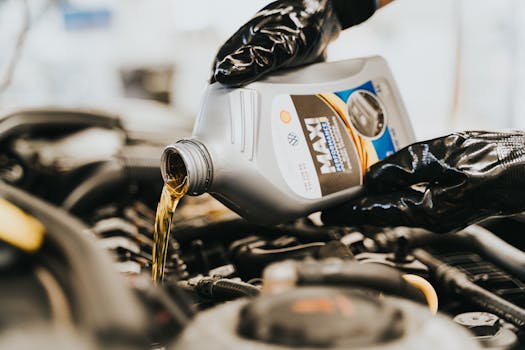
Close-up of a mechanic pouring engine oil into a car engine, highlighting maintenance work. Photo: Daniel Andraski / Pexels
Engine oil is far more than just a lubricant; it's the lifeblood of your vehicle, performing a multitude of critical functions that ensure your engine runs smoothly, efficiently, and for as long as possible. At its core, oil reduces friction between moving parts, preventing wear and tear that can lead to costly repairs. Without adequate lubrication, metal-on-metal contact would quickly generate immense heat, causing components to seize and eventually leading to catastrophic engine failure. This primary role of lubrication is fundamental to the very operation of an internal combustion engine. Beyond lubrication, engine oil acts as a coolant, absorbing heat from critical engine parts like pistons, cylinder walls, and bearings, and then dissipating it as it circulates through the engine and oil pan. This helps maintain optimal operating temperatures, preventing overheating that can warp metal components and compromise engine integrity. Think of it as a secondary cooling system, working in tandem with your radiator to keep temperatures in check. Another crucial function of engine oil is cleaning. As the engine operates, combustion byproducts, dirt, and metallic particles are generated. High-quality engine oil contains detergents and dispersants that suspend these contaminants, preventing them from clumping together and forming sludge or deposits. These suspended particles are then carried to the oil filter, where they are trapped. This cleaning action is vital for maintaining clear oil passages and preventing blockages that can starve parts of lubrication. Engine oil also provides a seal between the piston rings and cylinder walls. This sealing action helps maintain compression, which is essential for efficient combustion and power generation. A good seal prevents combustion gases from escaping past the piston rings, ensuring that the engine operates at its peak performance. Furthermore, oil protects internal engine components from corrosion and rust. Modern engine oils contain additives that create a protective film on metal surfaces, shielding them from moisture and acids that can form during the combustion process. This is particularly important for engines that are not driven frequently, where condensation can build up. Understanding these vital roles helps underscore why timely engine maintenance, particularly regular oil changes, is non-negotiable. Over time, engine oil degrades due to heat, oxidation, and contamination. Its additives break down, its viscosity changes, and its ability to lubricate, cool, clean, and protect diminishes significantly. This degradation is why mileage and time intervals for oil changes are so important – they represent the point at which the oil's protective qualities are compromised. Ignoring these intervals is akin to ignoring the health of your engine; it will inevitably lead to decreased performance, reduced fuel economy, and eventually, serious and expensive mechanical problems. Therefore, treating engine oil as the critical component it is, and adhering to recommended change schedules, is the single most effective way to ensure the longevity and reliability of your vehicle.

Factors Influencing Your Oil Change Frequency
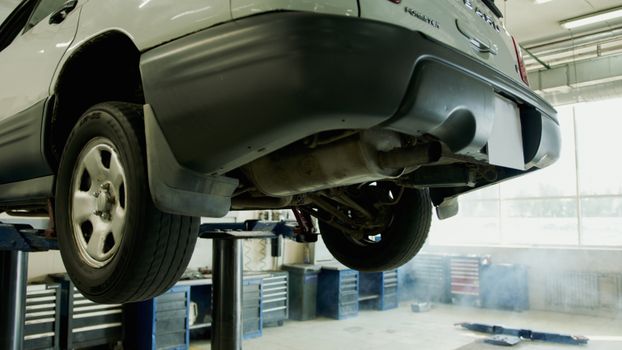
A vehicle elevated on a lift in an auto repair shop, ready for service. Photo: Artem Podrez / Pexels
Determining the ideal frequency for changing your engine oil isn't a one-size-fits-all answer. While your vehicle's owner's manual provides a baseline, several critical factors influence how often you should actually perform this vital maintenance task. Understanding these variables can help you tailor your oil change schedule to your specific driving habits and conditions, ultimately extending your engine's life and optimizing its performance. **1. Type of Oil:** This is perhaps the most significant factor. Conventional (mineral) oil has a shorter lifespan, typically requiring changes every 3,000 to 5,000 miles or every 3-6 months. Synthetic blend oils offer a compromise, extending intervals to 5,000-7,500 miles. Full synthetic oils, the premium choice, are engineered for superior performance and longevity, often allowing for intervals of 7,500 to 10,000 miles, or even longer in some modern vehicles with advanced engine designs and oil life monitoring systems. Some manufacturers even specify extended drain intervals of 15,000 miles or more for certain synthetic oils, but this should always be confirmed with your owner's manual and a qualified mechanic. **2. Driving Conditions:** Your driving environment plays a massive role in oil degradation. What's considered "severe" driving? Frequent short trips (less than 10 miles) where the engine doesn't reach optimal operating temperature, constant stop-and-go city driving, driving in extremely hot or cold climates, towing heavy loads, off-road driving, or driving in dusty conditions. These scenarios put extra stress on your engine and oil, causing it to break down faster. If you primarily engage in severe driving, you should lean towards the shorter end of your recommended oil change interval, regardless of the oil type you use. **3. Vehicle Age and Mileage:** Older vehicles, especially those with high mileage, may benefit from more frequent oil changes. As engines age, internal components wear, and clearances can increase, potentially leading to more blow-by gases and contaminants entering the oil. Additionally, older engines might be more prone to oil consumption, making regular checks and changes even more critical. Newer vehicles, often designed with tighter tolerances and advanced materials, can typically adhere to longer intervals. **4. Engine Design and Technology:** Modern engines are marvels of engineering, often incorporating features like turbochargers, direct injection, and variable valve timing. While these technologies improve performance and fuel efficiency, they can also place unique demands on engine oil. Turbocharged engines, for example, expose oil to extremely high temperatures, accelerating its breakdown. Many new vehicles also come equipped with sophisticated oil life monitoring systems that use algorithms based on engine revolutions, temperature, and other factors to determine when an oil change is due. While these systems are generally reliable, they should still be cross-referenced with your owner's manual and your driving habits. **5. Manufacturer Recommendations:** This cannot be stressed enough: your vehicle's owner's manual is your ultimate authority. Manufacturers spend countless hours testing and developing their engines, and their recommended oil change intervals are based on extensive research and engineering specifications. Deviating significantly from these recommendations without understanding the underlying factors can void warranties or lead to premature engine wear. Always check your manual for both mileage and time-based intervals, as even low-mileage vehicles need regular oil changes due to oxidation and contamination over time. By carefully considering these factors, you can create a personalized oil change schedule that keeps your engine running optimally for years to come.

You may also find Rent Car Barcelona useful.

The Different Types of Engine Oil and Their Lifespans

Pair of adult hands holding green and yellow toy cars on a white surface, symbolizing choice. Photo: SHVETS production / Pexels
Choosing the right engine oil is paramount to your vehicle's health and directly impacts how often you'll need to change it. The market offers several primary types of engine oil, each with distinct characteristics, benefits, and recommended lifespans. Understanding these differences will empower you to make an informed decision that aligns with your vehicle's needs, your driving conditions, and your budget. **1. Conventional Oil (Mineral Oil):** This is the most basic and least expensive type of engine oil. It's derived directly from crude oil, refined to remove impurities, and blended with a basic additive package. Conventional oil provides adequate lubrication for older engines, particularly those with less demanding operating conditions. However, its molecular structure is less uniform than synthetic oils, making it more prone to thermal breakdown, oxidation, and viscosity changes under extreme temperatures. As a result, conventional oil has the shortest lifespan, typically requiring changes every **3,000 to 5,000 miles or every 3-6 months**, whichever comes first. While it's suitable for older vehicles or those with simple engine designs, it's generally not recommended for modern, high-performance, or turbocharged engines due to its limited protective capabilities. **2. Synthetic Blend Oil (Semi-Synthetic Oil):** As the name suggests, synthetic blend oil is a mixture of conventional and synthetic base oils, combined with a more robust additive package. This blend offers a balance between the affordability of conventional oil and the enhanced protection and performance of full synthetics. Synthetic blends provide better resistance to oxidation and thermal breakdown than conventional oil, making them a good choice for drivers who want a step up in protection without the full cost of synthetic. They are often recommended for vehicles that experience moderate driving conditions or those transitioning from conventional to synthetic oil. The typical lifespan for synthetic blend oil is usually around **5,000 to 7,500 miles or every 6 months**, though this can vary by manufacturer and specific product. **3. Full Synthetic Oil:** This is the premium choice for engine lubrication. Full synthetic oils are engineered in laboratories, not simply refined from crude oil. This allows for precise control over their molecular structure, resulting in highly uniform molecules that provide superior performance. Key benefits of full synthetic oil include exceptional resistance to thermal breakdown, reduced friction, better flow at low temperatures (crucial for cold starts), and enhanced protection against sludge and deposits. These properties enable full synthetics to maintain their protective qualities for significantly longer periods. Consequently, full synthetic oils typically allow for extended oil change intervals of **7,500 to 10,000 miles or even up to 15,000 miles in some vehicles, often every 6-12 months**. Many modern vehicles, especially those with turbochargers, direct injection, or high-performance engines, are specifically designed to use full synthetic oil. While more expensive upfront, the extended drain intervals and superior engine protection often justify the cost, potentially saving money on long-term car repair costs and improving fuel efficiency. **4. High-Mileage Oil:** This category of oil is specifically formulated for vehicles with over 75,000 miles on the odometer. High-mileage oils, which can be conventional, synthetic blend, or full synthetic, contain special additives designed to address common issues in older engines. These additives often include seal conditioners to prevent leaks, extra detergents to clean out sludge and deposits, and anti-wear agents to protect worn internal components. While they don't necessarily extend oil change intervals beyond what their base type (conventional, synthetic blend, or full synthetic) would allow, they help maintain the health and performance of aging engines. If your vehicle has high mileage, considering a high-mileage formulation can be a smart move, adhering to the standard intervals for its base oil type.

Common Mistakes and Smart Tips for Your Oil Change Schedule

Hand checking oil dipstick in a car engine bay for maintenance and diagnostics. Photo: Gustavo Fring / Pexels
Maintaining your engine oil is a simple yet critical task, but it's surprisingly easy to make mistakes that can compromise your vehicle's health. Conversely, adopting smart habits can save you money, extend your engine's life, and prevent unexpected breakdowns. Here are some common pitfalls to avoid and practical tips to ensure your oil change schedule is optimized: **Common Mistakes to Avoid:** * **Ignoring the Owner's Manual:** This is the biggest mistake. Your manual contains precise recommendations for oil type, viscosity, and change intervals based on extensive engineering. Guessing or relying solely on outdated advice from friends can lead to using the wrong oil or changing it too infrequently. * **Sticking to the 3,000-Mile Rule Blindly:** While once a standard, this rule is largely obsolete for most modern vehicles, especially those using synthetic oil. Following it unnecessarily wastes money and resources. Always defer to your manual's recommendations for your specific car. * **Neglecting Time-Based Intervals:** Even if you don't drive many miles, oil degrades over time due to oxidation and moisture contamination. Most manufacturers recommend an oil change at least once a year, regardless of mileage. Skipping this can lead to sludge buildup. * **Using the Wrong Oil Type/Viscosity:** Putting conventional oil in an engine designed for synthetic, or using an incorrect viscosity (e.g., 10W-30 instead of 5W-20), can reduce lubrication effectiveness, hinder cold starts, and accelerate wear. Always match the oil to the manufacturer's specifications. * **Ignoring the Check Engine Light or Low Oil Pressure Warning:** These lights are not suggestions; they are critical warnings. A low oil pressure light indicates a severe problem that requires immediate attention to prevent catastrophic engine damage. A check engine light can sometimes relate to oil system issues. * **Not Changing the Oil Filter:** An old, clogged oil filter can't effectively trap contaminants, allowing dirty oil to circulate through your engine. Always replace the oil filter with every oil change. **Smart Tips for Optimal Oil Changes:** * **Regularly Check Your Oil Level:** Don't wait for a warning light. Make it a habit to check your oil level with the dipstick at least once a month, or before long trips. This helps catch leaks or consumption issues early. * **Keep Records:** Maintain a log of your oil changes, including mileage, date, and the type of oil used. This is crucial for warranty purposes, resale value, and knowing when your next service is due. * **Consider an Oil Life Monitor (if applicable):** If your vehicle has an oil life monitoring system, use it! These systems are more sophisticated than simple mileage counters and factor in actual driving conditions to recommend optimal change intervals. Just remember to reset it after each change. * **Buy Oil in Bulk (if you do DIY):** If you perform your own oil changes, buying oil in larger quantities when it's on sale can save you money in the long run. * **Choose a Reputable Service Provider:** If you don't do it yourself, select a trusted mechanic or service center that uses quality oil and filters and adheres to manufacturer specifications. Ask what type of oil they use. * **Understand Your Driving Habits:** Be honest with yourself about your driving conditions. If you frequently drive in severe conditions, adjust your oil change schedule accordingly, even if using synthetic oil. It's better to change it a little early than too late. * **Dispose of Used Oil Responsibly:** Never pour used oil down the drain or into the ground. Most auto parts stores and service centers accept used oil for recycling.

Comparison

FeatureFull Synthetic OilSynthetic Blend OilConventional Oil
Base MaterialChemically EngineeredBlend (Synthetic + Mineral)Refined Crude Oil
Typical Change Interval7,500 - 15,000 miles / 6-12 months5,000 - 7,500 miles / 6 months3,000 - 5,000 miles / 3-6 months
CostHighestMediumLowest
Thermal StabilityExcellentGoodFair
Cold Flow PerformanceExcellentGoodFair
Engine ProtectionSuperiorVery GoodGood
Sludge/Deposit ResistanceExcellentGoodFair
Recommended ForModern, high-performance enginesModerate driving, general useOlder, less demanding engines

What Readers Say

"This guide finally cleared up all my confusion about how often to change engine oil. I used to just go by the sticker, but now I understand my driving habits mean I should be changing it a bit sooner with my synthetic blend."

Sarah P. · Austin, TX

"The details on synthetic vs. conventional oil were incredibly helpful. I switched to full synthetic based on this article's advice and my car's manual, and now I feel much more confident about my engine's longevity."

Mark D. · Chicago, IL

"After reading this, I realized I was making the mistake of only going by mileage and ignoring the time factor. My car rarely hits the mileage, but it's been a year, so I scheduled an oil change. It's already running smoother!"

Jessica L. · Miami, FL

"Good breakdown of factors. I appreciate the emphasis on the owner's manual. While I knew some of this, the depth on driving conditions and oil types was a great refresher."

Tom R. · Denver, CO

"I drive a lot for work, and the section on severe driving conditions was exactly what I needed. Now I know to adjust my schedule more frequently than just the standard recommendation, even with synthetic oil."

Emily S. · Seattle, WA

Frequently Asked Questions

What is the absolute longest I can go without changing my oil?

While some premium synthetic oils and modern engines claim intervals up to 15,000-20,000 miles, it's crucial to consult your specific owner's manual. Generally, even with minimal driving, most manufacturers recommend an oil change at least once a year to prevent degradation from oxidation and contamination. Pushing beyond recommended limits risks severe engine damage.

Will changing my oil more frequently than recommended hurt my engine?

No, changing your oil more frequently than recommended will not harm your engine. In fact, it can provide an extra layer of protection, especially under severe driving conditions. The only 'downside' is the increased cost and environmental impact of unnecessary changes, but it's never detrimental to the engine itself.

How do I check my engine oil level and condition?

To check your oil, ensure your car is on level ground and the engine is cool (or has been off for at least 10-15 minutes). Pull out the dipstick, wipe it clean, reinsert it fully, then pull it out again. The oil level should be between the 'min' and 'max' marks. Also, observe the oil's color and texture – clear, golden-brown is good; black, gritty, or milky indicates it's time for a change.

Is synthetic oil worth the extra cost?

For most modern vehicles, especially those with turbochargers or direct injection, synthetic oil is absolutely worth the extra cost. It offers superior protection against wear, better performance in extreme temperatures, and allows for extended oil change intervals, potentially saving you money in the long run by preventing costly engine repairs and improving fuel efficiency. Always verify if your manufacturer recommends or requires synthetic.

How does an oil life monitoring system work, and should I trust it?

An oil life monitoring system uses algorithms that consider various factors like engine temperature, RPMs, vehicle speed, and driving conditions to estimate oil degradation. It's generally reliable and more accurate than a simple mileage counter for determining actual oil life. You should trust it, but always cross-reference its recommendations with your owner's manual and be aware of any severe driving conditions that might warrant an earlier change.

Who should be most vigilant about their oil change schedule?

Drivers who frequently engage in 'severe' driving conditions should be most vigilant. This includes those who drive short distances, in stop-and-go traffic, tow heavy loads, drive in dusty environments, or experience extreme hot or cold temperatures regularly. Also, owners of older vehicles or high-performance cars should pay close attention to their oil change intervals.

Can neglecting oil changes lead to permanent engine damage?

Yes, absolutely. Neglecting oil changes is one of the quickest ways to cause permanent and expensive engine damage. Without fresh oil, lubrication breaks down, leading to increased friction, excessive heat, sludge buildup, and ultimately, metal-on-metal contact. This can result in worn bearings, seized pistons, camshaft damage, and complete engine failure, often requiring a costly engine rebuild or replacement.

What's the future trend for oil change intervals?

The trend for oil change intervals is towards longer periods, driven by advancements in engine technology and synthetic oil formulations. Manufacturers are designing engines with tighter tolerances and using more durable materials, while oil companies are developing even more robust, long-lasting synthetic oils. We can expect to see more vehicles with 15,000-20,000 mile or even longer intervals become standard, alongside increasingly sophisticated oil life monitoring systems.

Don't leave your engine's health to chance. By understanding how often to change engine oil and adhering to smart maintenance practices, you're investing in your vehicle's longevity and performance. Consult your owner's manual, choose the right oil, and enjoy peace of mind on the road.

Topics: how often to change engine oilengine oil change frequencysynthetic oil change intervalconventional oil change scheduleoil change mileage
Leo List
Brampton weed
Adultwork