Essential DIY Car Maintenance Tips for Every Driver
diy car maintenance tips

Essential DIY Car Maintenance Tips for Every Driver

Empower yourself with the knowledge to maintain your vehicle, save money, and ensure road safety.

Start Your DIY Journey

Key Takeaways

  • ✓ Regular DIY maintenance can save you hundreds, even thousands, of dollars annually.
  • ✓ Performing basic checks can significantly extend your vehicle's lifespan and improve resale value.
  • ✓ Understanding your car's basic systems builds confidence and reduces anxiety about breakdowns.
  • ✓ Many routine maintenance tasks require only simple tools and a few hours of your time.

How It Works

1
Gather Your Tools & Manual

Before starting any task, ensure you have the necessary tools and your car's owner's manual. The manual is an invaluable resource for specific fluid types and maintenance schedules.

2
Understand Your Vehicle's Needs

Familiarize yourself with your car's maintenance schedule and common checkpoints. This proactive approach helps identify potential issues before they become major problems.

3
Perform Routine Checks

Regularly check fluids, tires, lights, and wipers. These simple, quick inspections can prevent costly repairs and ensure your safety on the road.

4
Learn & Practice New Skills

Start with easy tasks like changing oil or air filters, then gradually tackle more complex repairs. Online tutorials and community forums can be excellent learning resources.

Understanding Your Vehicle: The Foundation of DIY Car Care
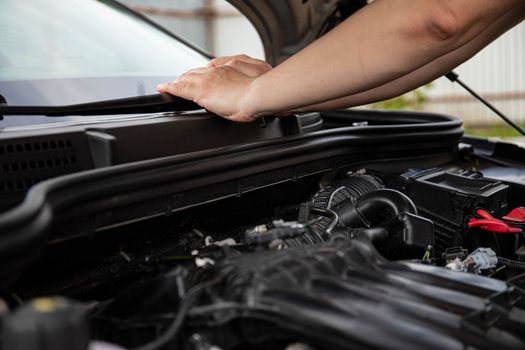
Close-up of hands working on car engine. Detailed view of automotive repair. Photo: Sergey Meshkov / Pexels
Embarking on the journey of DIY car maintenance begins not with a wrench, but with knowledge. Understanding the basic systems of your vehicle is paramount to confidently performing any task, no matter how small. Your car is a complex machine, but its core functions are surprisingly logical. Familiarize yourself with your owner's manual – it's the most underrated tool in your garage. This book contains specific details about your make and model, including recommended maintenance schedules, fluid types, and warning light explanations. Ignoring it is like trying to cook a complicated recipe without looking at the instructions. Beyond the manual, a general understanding of how an internal combustion engine works, the role of the transmission, and the function of the braking system will empower you to diagnose minor issues and communicate more effectively with mechanics if professional help is needed. For instance, knowing that your engine requires clean oil to lubricate moving parts helps you understand why regular oil changes are so crucial. Similarly, recognizing the purpose of the cooling system will make you proactive about checking coolant levels, preventing potentially catastrophic overheating. One of the first steps in building this foundational knowledge is to identify the major components under your hood. Learn where the engine oil dipstick is, the coolant reservoir, the brake fluid reservoir, the power steering fluid reservoir (if applicable), and the windshield wiper fluid reservoir. Knowing their locations and how to check their levels is a fundamental DIY skill. Equally important is understanding your tire pressure monitoring system (TPMS) and how to check and inflate your tires correctly. Tire pressure affects everything from fuel economy to handling and safety. Under-inflated tires can lead to premature wear and even blowouts, while over-inflated tires can reduce traction and ride comfort. Taking the time to read up on these basics will not only make you a more informed car owner but also save you money in the long run by preventing preventable issues. Remember, every expert was once a beginner. Start with the basics, and gradually build your expertise. Consider exploring resources on essential auto parts to further your understanding of what makes your car tick. This foundational knowledge is the bedrock upon which all effective DIY car maintenance tips are built, enabling you to approach repairs and upkeep with confidence and competence. It's about demystifying the mechanics and taking control of your vehicle's health.

Essential Fluid Checks and Replacements for Longevity
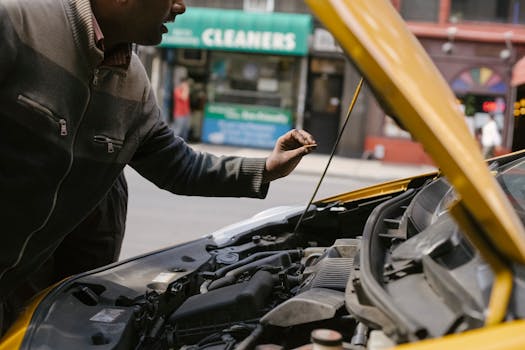
Side view of crop ethnic male repairing motor in broken auto parked on city street Photo: Tim Samuel / Pexels
Fluids are the lifeblood of your vehicle, and regularly checking and, when necessary, replacing them is one of the most impactful DIY car maintenance tips you can adopt. There are several critical fluids that keep your car running smoothly, each serving a specific purpose. **Engine Oil:** This is perhaps the most well-known fluid. Engine oil lubricates moving parts, reduces friction, dissipates heat, and cleans the engine. Checking your oil level is a simple task: ensure your car is on level ground and the engine is cool (or has been off for at least 10-15 minutes). Locate the dipstick, pull it out, wipe it clean, reinsert it fully, then pull it out again to check the level. It should be between the 'min' and 'max' marks. If it's low, top it up with the correct type of oil specified in your owner's manual. Oil changes are typically recommended every 3,000 to 10,000 miles, depending on your vehicle and oil type (conventional vs. synthetic). Changing your oil yourself is a rewarding task that can save you a significant amount. **Coolant/Antifreeze:** The cooling system prevents your engine from overheating. Coolant levels should be checked when the engine is cold. Locate the translucent reservoir, and ensure the fluid is between the 'min' and 'max' lines. Never open a hot radiator cap, as pressurized hot fluid can cause severe burns. Coolant also prevents freezing in cold weather. Over time, coolant degrades and loses its effectiveness, so flushing and replacing it according to your manufacturer's schedule (often every 30,000 to 60,000 miles) is crucial. **Brake Fluid:** This hydraulic fluid transmits the force from your brake pedal to the calipers, engaging the brakes. Check the brake fluid reservoir, usually a small, clear container near the master cylinder on the driver's side. The level should be between the 'min' and 'max' marks. If it's consistently low, it could indicate worn brake pads or a leak, which requires immediate attention. Brake fluid is hygroscopic, meaning it absorbs moisture over time, which can reduce its boiling point and lead to brake fade. It's often recommended to flush and replace brake fluid every 2-3 years. **Power Steering Fluid:** For vehicles with hydraulic power steering, this fluid makes turning the steering wheel effortless. Check the reservoir level when the engine is cold. If low, top it off with the specified fluid. A low level can lead to a whining noise when turning and harder steering. **Transmission Fluid:** This fluid lubricates the transmission's moving parts and helps cool it. Checking transmission fluid often requires the engine to be warm and running (check your manual for specific instructions). The dipstick is usually located near the engine. Low or dirty transmission fluid can lead to shifting problems and costly transmission damage. **Windshield Wiper Fluid:** While not critical to engine function, keeping your wiper fluid reservoir topped up ensures clear visibility, a key safety feature. Use a good quality fluid that cleans effectively and prevents freezing in winter. Regularly monitoring these fluids and addressing any issues promptly will significantly contribute to your vehicle's health and prevent premature wear and tear on expensive components. This proactive approach is a cornerstone of effective DIY car maintenance.

Tire Care and Lighting: Crucial for Safety and Efficiency
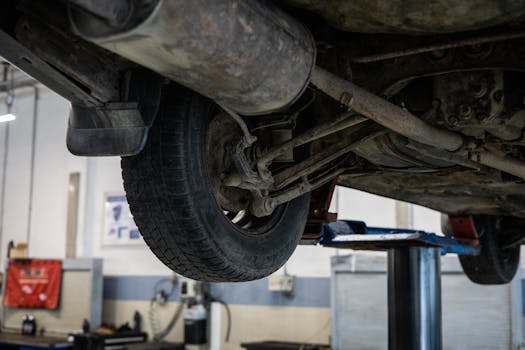
Close-up of car's undercarriage in a service station for repair and maintenance. Photo: Artem Podrez / Pexels
Beyond fluids, proper tire care and ensuring all your vehicle's lights are functioning are among the most straightforward yet critical DIY car maintenance tips for both safety and efficiency. Your tires are the only part of your car that touches the road, making their condition paramount to handling, braking, and overall safety. **Tire Pressure:** Incorrect tire pressure is a common issue that can lead to rapid tire wear, decreased fuel economy, and compromised handling. Check your tire pressure at least once a month, and always before long trips, using a reliable tire pressure gauge. The recommended pressure can be found on a sticker usually located on the driver's side door jamb or in your owner's manual, NOT on the tire sidewall (which indicates maximum pressure). Remember to check when tires are cold for the most accurate reading. **Tire Tread Depth:** Adequate tread depth is essential for grip, especially in wet or snowy conditions. You can easily check tread depth using the 'penny test.' Insert a penny into a tread groove with Lincoln's head upside down and facing you. If you can see the top of Lincoln's head, your tread is too shallow (less than 2/32 inch), and it's time for new tires. Regularly inspecting your tires for uneven wear, bulges, or cracks can also alert you to potential issues like improper alignment or suspension problems. **Tire Rotation:** Rotating your tires every 5,000 to 7,500 miles helps ensure even wear across all four tires, extending their lifespan. While this might be a task you prefer a professional to do, understanding its importance is key. **Wheel Alignment:** If your car pulls to one side, your steering wheel isn't centered, or you notice uneven tire wear, your alignment might be off. Proper alignment ensures your wheels are pointing in the right direction, optimizing handling and tire longevity. This is typically a job for a professional shop. **Lighting System Checks:** All lights on your vehicle serve a crucial safety purpose, from headlights illuminating the road to brake lights signaling your intentions. Regularly walk around your car and check that all headlights (high and low beams), tail lights, brake lights, turn signals, and hazard lights are working. Have a friend help you check brake lights. Replacing a burnt-out bulb is often a simple, inexpensive DIY task that can prevent accidents and tickets. Keeping your headlight lenses clean and clear is also important, as cloudy lenses can significantly reduce light output. There are many DIY kits available to restore hazy headlights. Neglecting these seemingly minor details can have significant repercussions on your safety and the safety of others on the road. For more advanced lighting solutions, consider exploring specialized auto lighting components.

Common DIY Car Maintenance Mistakes to Avoid
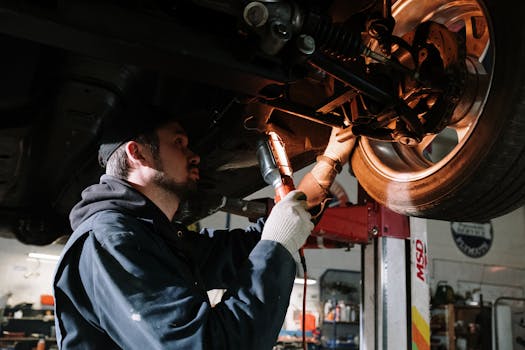
Mechanic examining car's undercarriage at a garage, focusing on vehicle maintenance. Photo: cottonbro studio / Pexels
While embracing DIY car maintenance tips can be incredibly empowering and cost-effective, it's equally important to be aware of common mistakes that can turn a simple task into a costly repair. Avoiding these pitfalls will ensure your efforts are always beneficial. **1. Using the Wrong Fluids:** * **Mistake:** Using generic or incorrect engine oil, coolant, brake fluid, or transmission fluid. * **Why it's bad:** Modern vehicles have very specific fluid requirements. Using the wrong type can lead to premature wear, component failure, and voided warranties. * **Tip:** Always consult your owner's manual for the exact specifications (e.g., oil viscosity, coolant type, DOT rating for brake fluid). **2. Overtightening or Undertightening Bolts:** * **Mistake:** Using excessive force when tightening bolts or leaving them too loose. * **Why it's bad:** Overtightening can strip threads, crack components, or shear bolts. Undertightening can lead to leaks, vibrations, and parts coming loose. * **Tip:** Invest in a torque wrench and use the manufacturer's specified torque settings. This is especially crucial for oil drain plugs, spark plugs, and wheel lug nuts. **3. Neglecting Safety Precautions:** * **Mistake:** Working under a car supported only by a jack, not wearing eye protection, or working on a hot engine. * **Why it's bad:** This can lead to serious injuries, including crush injuries, burns, or chemical exposure. * **Tip:** Always use jack stands when working under a vehicle. Wear safety glasses and gloves. Ensure the engine is cool before working on fluid reservoirs or hot components. Disconnect the battery when working on electrical systems. **4. Ignoring Warning Signs:** * **Mistake:** Dismissing dashboard warning lights, unusual noises, or strange smells. * **Why it's bad:** These are your car's ways of telling you something is wrong. Ignoring them can turn a minor issue into a major, expensive repair. * **Tip:** Address warning lights or unusual symptoms promptly. Consult your owner's manual or an online resource to understand what they mean and whether immediate action is required. **5. Not Cleaning Up Spills:** * **Mistake:** Leaving spilled oil, coolant, or other fluids on the ground. * **Why it's bad:** These fluids are toxic to the environment and can create slip hazards. * **Tip:** Keep absorbent rags or cat litter handy to clean up spills immediately. Dispose of used fluids responsibly at designated recycling centers. By being mindful of these common mistakes, you can ensure your DIY efforts are always productive and safe, contributing positively to your vehicle's health and your peace of mind.

Comparison

Maintenance TaskDIY FeasibilityCost Savings PotentialTools Required
Oil ChangeHighHigh (up to $50/change)Wrench, drain pan, funnel, jack, jack stands
Tire Pressure CheckVery HighN/A (prevents costly tire wear)Tire pressure gauge
Air Filter ReplacementHighMedium (up to $30/change)Screwdriver (sometimes)
Wiper Blade ReplacementHighMedium (up to $20/pair)None
Fluid Level ChecksVery HighN/A (prevents major repairs)None
Brake Pad ReplacementMediumHigh (up to $150/axle)Wrench set, C-clamp, jack, jack stands
Spark Plug ReplacementMediumHigh (up to $100+)Spark plug socket, ratchet, torque wrench

What Readers Say

"These DIY car maintenance tips have been a game-changer! I used to be intimidated by car care, but this guide broke it down into manageable steps. I've already saved money on oil changes."

Sarah J. · Austin, TX

"As a new car owner, I found this article invaluable. The fluid check section was particularly helpful, and I now feel much more confident under the hood. Highly recommend for anyone looking to save!"

Mark D. · Orlando, FL

"I followed the advice on tire care, and my fuel economy has improved noticeably. Plus, I caught a low tire pressure issue before it became a problem. Concrete results and peace of mind!"

Emily R. · Denver, CO

"While some tasks are still a bit beyond my comfort level, the emphasis on understanding my car's manual and the safety tips were excellent. It's a great starting point for anyone interested in DIY."

Chris L. · Seattle, WA

"Even with my older model car, these tips were relevant and easy to apply. I appreciate the focus on longevity and preventing issues, which is crucial for keeping an older vehicle running well."

Jessica M. · Chicago, IL

Frequently Asked Questions

What are the most important DIY car maintenance tips for beginners?

For beginners, the most important DIY car maintenance tips involve familiarizing yourself with your owner's manual, regularly checking fluid levels (engine oil, coolant, brake fluid, windshield washer fluid), inspecting tire pressure and tread depth, and ensuring all lights are working. These basic checks are easy to perform and can prevent many common issues.

Is it really safe to perform my own car maintenance?

Yes, performing basic car maintenance tasks yourself can be very safe, provided you follow proper safety precautions. Always use jack stands when working under a vehicle, wear appropriate safety gear like gloves and eye protection, and ensure the engine is cool before handling fluids. Never attempt tasks you're unsure about; consult a professional.

How often should I change my car's oil if I do it myself?

The frequency of oil changes depends on your vehicle's make and model, the type of oil you use (conventional, synthetic blend, or full synthetic), and your driving habits. Always refer to your car's owner's manual for the manufacturer's recommended oil change interval. Modern cars often have longer intervals, sometimes 7,500 to 10,000 miles or more with synthetic oil.

Will doing my own car maintenance void my warranty?

No, performing your own routine maintenance will not void your car's warranty, as long as you use approved parts and fluids and keep detailed records of your maintenance (dates, mileage, parts used). The Magnuson-Moss Warranty Act protects consumers' rights to perform their own vehicle maintenance without voiding the warranty. However, improper repairs or the use of incorrect parts could lead to issues not covered by warranty.

How do DIY car maintenance tips compare to taking my car to a professional mechanic?

DIY car maintenance tips focus on routine checks and basic replacements that save money and build knowledge. A professional mechanic is essential for complex diagnostics, major repairs, and tasks requiring specialized tools or expertise. The best approach is often a combination: handle routine DIY tasks and rely on professionals for more intricate issues.

Who should consider doing their own car maintenance?

Anyone looking to save money, gain a better understanding of their vehicle, or simply enjoy the satisfaction of working with their hands should consider doing their own car maintenance. It's particularly beneficial for budget-conscious individuals, those with a mechanical inclination, or anyone who wants to ensure their car is well-maintained between professional services.

What are the biggest safety risks when performing DIY car maintenance?

The biggest safety risks include a vehicle falling from an improperly used jack, severe burns from hot engine components or fluids, chemical exposure, and electrical shocks from working on battery or wiring systems without proper precautions. Always prioritize safety by using correct equipment, wearing protective gear, and understanding the risks associated with each task.

What future trends might impact DIY car maintenance tips?

Future trends impacting DIY car maintenance tips include the increasing complexity of electric and hybrid vehicles, which have different maintenance needs (e.g., battery health, regenerative braking systems). Advanced driver-assistance systems (ADAS) and integrated software will also require more specialized diagnostic tools, potentially limiting some DIY tasks and shifting focus to software updates and sensor care.

Embrace the power of these DIY car maintenance tips to take control of your vehicle's health, save money, and drive with confidence. Start today and transform your approach to car ownership.

Topics: diy car maintenance tipscar care at homevehicle upkeep guidebasic auto repairsaving on car maintenance
Leo List
Brampton weed
Adultwork