Your Ultimate Car Parts Compatibility Checker Guide
car parts compatibility checker

Your Ultimate Car Parts Compatibility Checker Guide

Unlock seamless auto repair and upgrades by ensuring every part fits your specific vehicle model perfectly.

Check Compatibility Now

Key Takeaways

  • ✓ Using a compatibility checker significantly reduces errors in part purchasing.
  • ✓ It saves both time and money by preventing returns and reorders.
  • ✓ Compatibility tools cover a vast range of vehicle makes, models, and years.
  • ✓ Many online retailers integrate these checkers directly into their platforms.

How It Works

1
Enter Vehicle Information

Input your car's Year, Make, Model, and often its Trim or Engine type. This data forms the foundation for accurate part matching.

2
Search for Desired Part

Browse or search for the specific auto part you need, such as brake pads, an alternator, or a headlight assembly. The system filters results based on your vehicle.

3
Verify Compatibility

The checker will display whether the selected part is 'Compatible,' 'Not Compatible,' or sometimes 'Requires further verification.' Look for clear indicators.

4
Proceed with Confidence

Once compatibility is confirmed, you can add the part to your cart or proceed with purchase, knowing it's the correct fit for your vehicle.

The Indispensable Role of a Car Parts Compatibility Checker
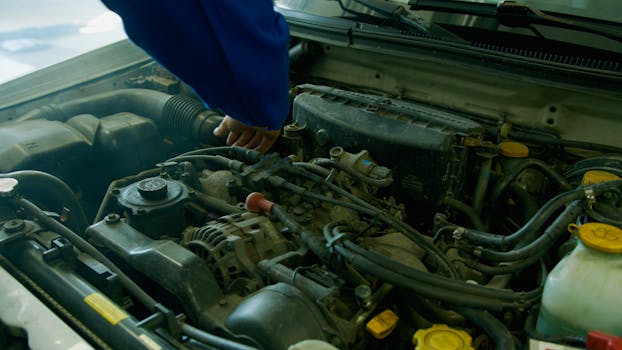
Mechanic in blue uniform working on a car engine in a garage environment. Photo: Artem Podrez / Pexels
In the vast and intricate world of automotive repair and maintenance, selecting the correct part for your vehicle is not merely a convenience; it's a critical necessity. The sheer diversity of car models, their various trims, engine configurations, and manufacturing year variations means that a seemingly identical part can, in reality, be profoundly different. This is where a robust car parts compatibility checker becomes an indispensable tool for both professional mechanics and DIY enthusiasts alike. Without it, the process of purchasing auto parts can quickly devolve into a frustrating cycle of incorrect orders, costly returns, and prolonged vehicle downtime. Imagine needing a new alternator for your sedan. You might assume all alternators for your car's make and model year are the same. However, factors like whether your car has a standard or high-output electrical system, a specific engine code, or even a particular manufacturing plant can dictate the exact alternator required. An incorrect purchase not only wastes your hard-earned money on shipping and potential restocking fees but also delays the repair, leaving your vehicle inoperable for longer than necessary. This scenario highlights the core value of a compatibility checker: it acts as a digital gatekeeper, ensuring that only parts specifically designed for your vehicle are presented as viable options. These sophisticated tools leverage extensive databases containing millions of OEM (Original Equipment Manufacturer) and aftermarket part numbers, cross-referenced against detailed vehicle specifications. When you input your vehicle's Year, Make, Model, and often the Trim or Engine size, the checker instantly filters through this vast repository, presenting you with a curated list of parts guaranteed to fit. This precision eliminates guesswork, reduces the risk of expensive errors, and empowers you to make informed purchasing decisions with absolute confidence. Furthermore, many advanced compatibility systems can even account for nuances such as specific production dates or region-specific vehicle configurations, providing an unparalleled level of accuracy. The peace of mind that comes from knowing you're ordering the right part the first time is invaluable, translating directly into saved time, money, and a smoother repair experience. It's a fundamental shift from hoping a part fits to knowing it will.

Navigating the Complexities of Auto Part Fitment
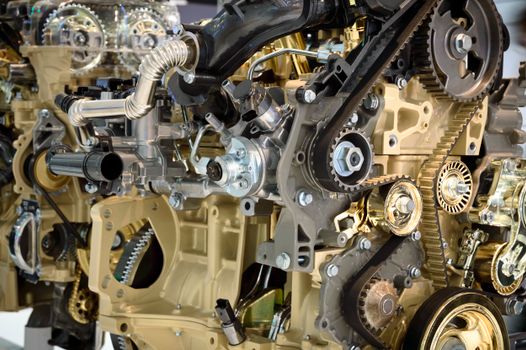
Detailed view of a modern car engine showcasing gears and mechanical components. Photo: Adem Percem / Pexels
The automotive industry is characterized by an astonishing level of complexity, particularly when it comes to parts. Even within the same make and model, variations can be abundant. For instance, a Honda Civic from 2015 might have different brake pad specifications depending on whether it's an LX, EX, or Si trim level, or if it was manufactured with a specific brake package. Add to this the constant evolution of vehicle designs, engine technologies, and safety features year after year, and the challenge of finding the perfect part becomes daunting without specialized assistance. A car parts compatibility checker simplifies this intricate landscape, acting as your personal automotive librarian, instantly cross-referencing your vehicle's unique identity with a global catalog of components. Beyond basic fitment, compatibility extends to function and performance. Installing a part that physically fits but isn't electrically compatible could lead to malfunctions, error codes, or even damage to other vehicle systems. For example, replacing a sensor with one that has different voltage requirements, even if the connector looks similar, can cause significant issues. Similarly, suspension components might fit dimensionally but be designed for different vehicle weights or driving dynamics, leading to suboptimal handling or premature wear. These subtleties are precisely what a high-quality compatibility checker is designed to address, moving beyond mere physical dimensions to encompass the full spectrum of operational requirements. Many online platforms integrate these checkers seamlessly into their product listings. When you search for a part, after entering your vehicle details, you'll often see clear indicators like 'Fits your 2018 Toyota Camry XLE' or 'Does NOT fit your vehicle.' Some even offer an 'Add a Vehicle' feature, allowing you to store multiple vehicles in your profile for quick reference, a boon for households with several cars or for mechanics managing a fleet. This integration makes the purchasing process intuitive and nearly foolproof, drastically reducing the chances of ordering the wrong item. Understanding and utilizing these tools is no longer a luxury but a necessity for anyone involved in vehicle maintenance or repair, ensuring precision and preventing costly mistakes in a world where automotive parts are rarely one-size-fits-all. The level of detail embedded within these systems is staggering, often including specific production month ranges, engine codes, transmission types, and even original equipment options that might affect part interchangeability. This deep dive into vehicle specifics ensures that the part you select will not only physically fit but also function flawlessly within your vehicle's intricate ecosystem. Without such a tool, navigating the aftermarket for a critical component like a catalytic converter or even a simple spark plug can become a minefield of potential errors, each with its own set of financial and time-consuming repercussions. The investment in understanding how to effectively use these checkers pays dividends in accuracy, efficiency, and peace of mind.

Maximizing Efficiency and Savings with Your Compatibility Tool

Top view of a calculator showing $5200 surrounded by $100 bills on a tan background. Photo: olia danilevich / Pexels
The financial and temporal benefits of using a car parts compatibility checker are substantial and immediate. Consider the typical scenario without such a tool: you identify a part you need, spend time researching its specifications, place an order, wait for delivery, only to discover upon arrival that it doesn't fit. This initiates a cascade of problems: you have to package the incorrect part, arrange for its return (potentially incurring shipping costs or restocking fees), wait for the refund, and then restart the entire process of finding and ordering the correct component. This cycle can easily add days, or even weeks, to a repair, during which your vehicle remains out of commission. Each step represents a cost – be it direct monetary expense, wasted time, or the inconvenience of being without your primary mode of transportation. By contrast, a compatibility checker streamlines this entire workflow. By verifying fitment before the purchase, you essentially eliminate the risk of ordering the wrong part. This means no wasted shipping costs, no frustrating returns, and no delays. The part you order is the part you need, delivered directly to your door, ready for installation. For individuals, this translates to less stress and more time back in their schedule. For professional shops, it means increased efficiency, higher customer satisfaction, and improved profitability due to reduced reorder rates and faster turnaround times on repairs. The initial few minutes spent accurately inputting vehicle details into the checker can save hours of logistical headaches down the line. Moreover, many online parts retailers now offer guarantees based on their compatibility checkers, providing an additional layer of assurance. Furthermore, using these tools allows you to confidently explore aftermarket options. While OEM parts offer guaranteed fit and quality, aftermarket parts can often provide a more cost-effective alternative. However, the sheer volume and variety of aftermarket brands can be overwhelming, and ensuring their compatibility is paramount. A good compatibility checker will often include aftermarket equivalents alongside OEM options, verifying their fitment against your specific vehicle. This empowers you to make informed decisions that balance cost, quality, and guaranteed compatibility, ultimately maximizing your savings without compromising on the integrity of your repair. The ability to compare prices and brands for compatible parts across various vendors also adds to the financial advantage, ensuring you get the best deal for the exact component you need. This strategic advantage alone can save hundreds of dollars over the lifespan of a vehicle, transforming what was once a gamble into a calculated, informed purchase. Leveraging these tools effectively isn't just about avoiding mistakes; it's about optimizing your entire auto parts procurement strategy for maximum efficiency and savings, making every dollar and every minute count. Regular automotive maintenance becomes significantly easier and more cost-effective when you consistently get the right parts.

Common Pitfalls and Best Practices for Using a Compatibility Checker

A classic Land Rover parked outdoors, showcasing vintage charm in an urban scene. Photo: Craig Adderley / Pexels
While car parts compatibility checkers are incredibly powerful tools, they are not entirely foolproof, and understanding their limitations and best practices is crucial for optimal results. One common pitfall is incomplete or inaccurate vehicle information. If you only enter the year, make, and model, but omit a critical detail like the engine size, trim level, or specific options (e.g., 'with heavy-duty brakes'), the checker might return a list of parts that are only partially compatible or not compatible at all. Always strive to provide the most granular detail possible, often found on your vehicle's door jamb sticker, owner's manual, or VIN decoder. Another mistake is blindly trusting the 'fits' label without any additional verification, especially for highly critical components. While the checker is usually accurate, cross-referencing with the part number from your existing component or consulting your vehicle's service manual can provide an extra layer of security. Some parts have multiple valid options depending on the exact build date or factory configuration, and a visual inspection or comparison of part numbers can confirm the best match. This is particularly true for older or less common vehicles where database information might be less comprehensive. Here are some best practices to ensure you get the most out of your car parts compatibility checker: * **Always use your VIN (Vehicle Identification Number):** The VIN is the most accurate identifier for your vehicle. Many advanced checkers allow you to input your VIN directly, which provides the most precise fitment data. * **Verify all vehicle details:** Double-check the year, make, model, trim, engine size, and any specific options your vehicle might have. * **Read product descriptions carefully:** Even with compatibility confirmed, the product description might contain important notes about specific applications or installation requirements. * **Cross-reference part numbers:** If possible, compare the part number of the new component with the part number on the old component you're replacing. * **Consult multiple sources:** If you're unsure, try checking compatibility on a couple of different reputable online parts retailers or forums. * **Beware of regional differences:** Some vehicle models have different specifications for different markets. Ensure the checker is set for your region (e.g., US market). By adhering to these best practices, you can significantly enhance the accuracy of your part selections and fully leverage the power of car parts compatibility checkers, transforming a potentially complex task into a straightforward and successful one.

Comparison

FeatureDedicated Compatibility ToolRetailer Integrated CheckerManual Research
Accuracy LevelExcellent (VIN-driven)Very Good (Vehicle-driven)Variable (User skill dependent)
Ease of UseHighHighLow
Time SavedSignificantSignificantNone / Negative
Error RateVery LowLowHigh
Cost Savings PotentialHigh (prevents returns)High (prevents returns)Low (high return risk)
Aftermarket OptionsOften includesOften includesRequires manual verification

What Readers Say

"I used to dread buying parts online. This car parts compatibility checker saved me from ordering the wrong struts twice! It's incredibly precise and easy to use."

Sarah J. · Austin, TX

"As a DIY mechanic, finding the right part is half the battle. This tool takes all the guesswork out of it. Highly recommend for anyone working on their own car."

Mark D. · Miami, FL

"I needed a new radiator for my older truck, and the checker confirmed the fit instantly. The part arrived, and it was a perfect match, no issues at all!"

Jessica L. · Denver, CO

"Mostly excellent, though for very specific trim levels, I still cross-reference with the old part number. It's a huge time-saver for 95% of my purchases."

Carlos P. · Chicago, IL

"Managing a small fleet of delivery vehicles, getting the right part first try is crucial. This compatibility checker has drastically cut down on our downtime due to incorrect orders."

Emily R. · Seattle, WA

Frequently Asked Questions

What is the most accurate way to use a car parts compatibility checker?

The most accurate way is to input your vehicle's full VIN (Vehicle Identification Number). The VIN provides a unique identifier that encompasses all specific details about your car's manufacturing, ensuring the checker can find the exact parts designed for it, including trim, engine, and specific factory options.

Can a compatibility checker prevent all wrong part purchases?

While highly effective, no system is 100% foolproof, especially with very old or heavily modified vehicles. However, a quality compatibility checker dramatically reduces the risk by flagging incompatible parts and guiding you towards correct options, minimizing errors to a negligible level if used correctly.

How do I find my vehicle's VIN for the compatibility checker?

Your VIN can typically be found in several places: on the driver's side dashboard (visible through the windshield), on a sticker inside the driver's side door jamb, on your vehicle registration card, or on your auto insurance documents. It's a 17-character alphanumeric code.

Are parts from different brands compatible if the checker says so?

Yes, if a reputable compatibility checker indicates that an aftermarket part from a different brand is compatible, it means the part is designed to meet the same specifications and fitment requirements as the OEM part. This allows you to explore various options and price points confidently.

How does a car parts compatibility checker compare to just looking up parts by year, make, and model?

While year, make, and model provide a good starting point, they often lack the specificity needed for perfect fitment due to various trims, engine options, and factory upgrades. A compatibility checker goes deeper, often using VIN data or requiring more detailed inputs to pinpoint the exact part needed, significantly reducing the chance of error compared to a broad search.

Who benefits most from using a car parts compatibility checker?

Everyone from casual car owners performing basic maintenance to experienced DIY mechanics and professional automotive technicians benefits. It's particularly valuable for those buying parts online, as it eliminates the physical verification step that's possible in a brick-and-mortar store, ensuring accuracy remotely.

Is it safe to rely on these checkers for critical safety components like brakes?

Absolutely. For critical safety components, accuracy is paramount. A reliable car parts compatibility checker is designed to provide precise fitment information for all parts, including brakes, steering, and suspension components, ensuring you install parts that meet your vehicle's safety standards. Always double-check with VIN.

What future developments can we expect in car parts compatibility checker technology?

Future developments may include AI-powered checkers that learn from user feedback, integration with vehicle diagnostics systems for predictive part failure, and even augmented reality tools that allow visual verification of parts against your vehicle, making the process even more seamless and accurate.

Embrace the precision and peace of mind that a car parts compatibility checker offers. Stop wasting time and money on incorrect orders and start ensuring every auto part purchase is the right one, every single time. Your vehicle deserves the correct components, and you deserve a hassle-free repair experience.

Topics: car parts compatibility checkerauto parts fitment toolvehicle part lookupcar component verificationcorrect auto parts
Leo List

IE Escorts NO Escorts US Escorts NZ Escorts AU Escorts
Brampton weed
Adultwork EstrelaBet Vai de Bet R7 Bet Betão Galera Bet Rainbet Bet9ja Shop SportyBet BetKing Sisal Loto Foot Hollywoodbets YesPlay Odibets RushBet Jugabet BetWarrior BetCity MSport betPawa Fortebet